
As a Hong Kong-based cross-border marketing agency, BINGO Digital has long focused on the differences between Chinese and international marketing ecosystems, helping brands expand across markets and build sustainable growth. As noted by global management consulting firm Bain & Company, navigating China's evolving digital ecosystem today requires a strategic shift from rapid scale to sustainable, profit-driven operations. Although mainland China's digital marketing sector is now moving through a phase of slower structural growth, this does not mean the window of opportunity has closed. On the contrary, the continued evolution of platform capabilities, the rapid advancement of marketing technology, and a series of emerging consumer opportunities are creating a new path forward for overseas brands looking to enter the mainland market.
Drawing on the latest 2025 market research and trend analysis, we have examined the defining characteristics of China's digital marketing environment, the operating logic of major platforms, and the changing preferences of mainland consumers. What has become increasingly clear is that digital marketing in China is no longer a simple contest for traffic. It is now a test of full-funnel operational strength. For overseas brands, success will not come from copying strategies that worked elsewhere. It will come from understanding the local ecosystem, choosing the right market-entry model, and executing each step with precision.
Go deep on one or two core platforms and build a full-funnel ecosystem
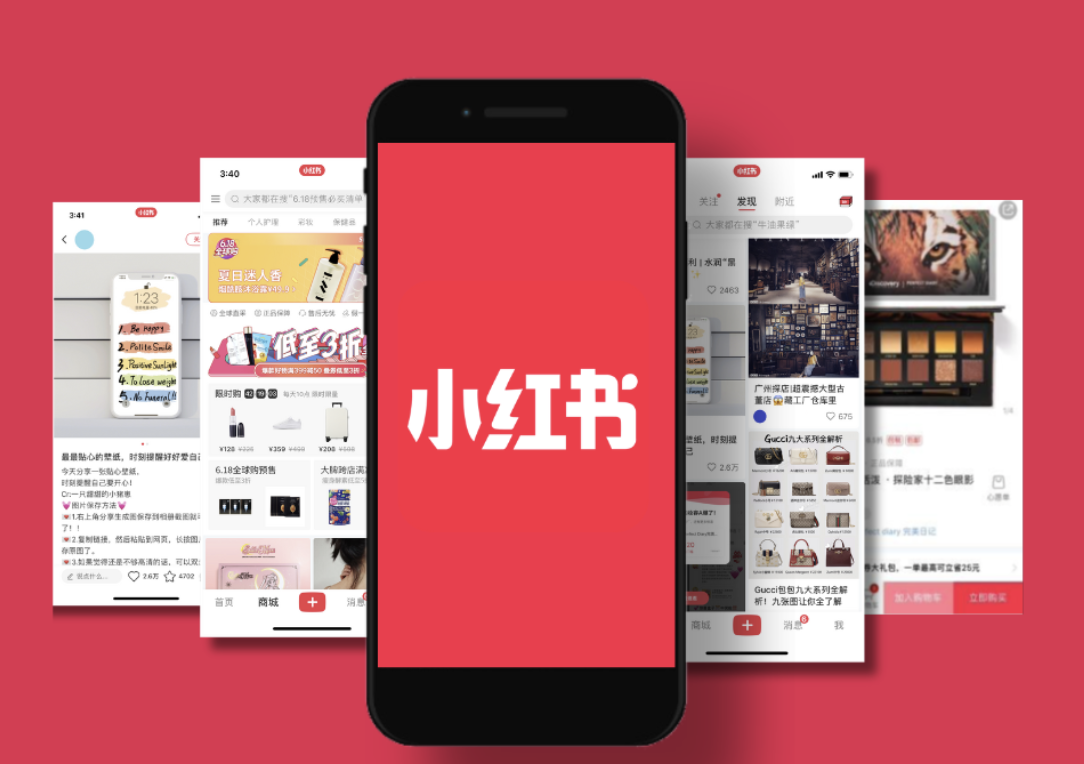
One of the most common mistakes overseas brands make when entering China is applying the same multi-platform strategy they use in overseas markets. Budgets are spread too thin, no single platform is developed properly, and the journey from awareness to conversion becomes fragmented. This approach is increasingly ineffective because mainland China's leading social platforms have already evolved into highly integrated ecosystems. Platforms such as Douyin and Xiaohongshu can now support content distribution, e-commerce conversion, and private-domain customer retention within a single environment. Rather than trying to be everywhere, brands are often better served by choosing the right platform and building depth.
In today's mainland market, major platforms are no longer just channels for awareness or sales. They can support the entire user journey, from initial discovery to long-term retention.
Babycare, for example, has built strong momentum on Douyin through parenting content and product reviews that naturally draw users into brand livestreams and store pages. From there, it extends engagement through segmented private-domain communities, including VIP-style groups and new-follower groups, creating a more complete in-platform marketing loop. Swisse, by contrast, has leaned into Xiaohongshu, using large volumes of KOC content to reach female consumers, supported by scheduled daily livestreaming and a private community of around 3,500 users to connect content exposure with conversion more effectively.
For overseas brands, the key in the early stage of China entry is to match platform choice with audience fit. Beauty and wellness brands are often better suited to Xiaohongshu, while fast-moving consumer goods and mother-and-baby brands may find a stronger starting point on Douyin. Once one or two platforms are selected, the goal should be to build an integrated operating model that connects content, commerce, and private-domain engagement. As a Hong Kong-based cross-border agency, BINGO Digital is uniquely positioned to bridge resources across markets and help brands connect quickly with mainland platform ecosystems, reducing the friction that often comes with local rule adaptation and partnership building.
Use AIGC to improve efficiency, but build content around local consumer logic
Content localisation remains one of the biggest challenges for overseas brands entering China. In many cases, the brand voice feels disconnected from mainland users, or the cost of producing localised content at scale becomes prohibitively high. This is precisely where China's increasingly mature generative AI ecosystem offers a meaningful advantage. In mainland digital marketing today, AI is no longer a simple support tool. It is reshaping the entire content production system. From professionally produced content to everyday user-generated material, AI is now helping creators work faster and more efficiently, making it a valuable opportunity for overseas brands seeking both cost control and execution speed.
Content creation in China has already moved into a blended model where professional content, semi-professional content, and AI-assisted production coexist. Tools built directly into platforms, such as Douyin's Jimeng AI and Kuaishou's Kling AI, allow brands to generate copy, images, and video assets quickly, without needing to build a large local content team from scratch. This can significantly reduce both the time and financial investment required for content production and adaptation. More importantly, content distribution in China follows a different logic from many overseas markets. Brands do not rely solely on expensive top-tier influencers. Instead, they often use a wider layer of KOCs to penetrate specific communities, supported by a smaller number of larger KOLs to broaden reach and strengthen brand visibility. This model gives overseas brands a more controlled and cost-efficient way to seed awareness while maintaining targeting precision.
For overseas brands, the practical opportunity is clear: make direct use of platform-native AI tools to produce product reviews, use-case content, and lifestyle-driven recommendation material that reflects mainland user preferences. Our role at BINGO Digital is to help transform existing overseas brand assets into content that feels native to the local market, using AI to accelerate high-volume production while carefully managing the balance between KOC seeding and KOL amplification. The result is content that retains the essence of the brand while fitting naturally into the mainland ecosystem.
Capture the new traffic opportunity in social search through precise keyword strategy
Consumer decision-making in mainland China has changed fundamentally. In the past, users often relied on general search engines (such as Baidu) to research products and services. Today, a growing share of consumers go directly to social platforms to search for recommendations, reviews, and comparison content. Search within social platforms has become a critical traffic Gateway connecting content discovery and purchase conversion. For overseas brands, this represents one of the most important new traffic opportunities in China—and one that is still frequently underestimated.
Official platform data shows just how important this shift has become. In 2024, Douyin's average daily e-commerce search users reached 140 million, while average daily page views from e-commerce search approached 500 million. On Xiaohongshu, around 70% of monthly active users actively use the platform's search function, and in early 2025 the platform also began testing AI-powered search features that aggregate content and products more intelligently. These developments reflect a broader trend: major platforms are continuously strengthening their internal traffic loops, encouraging users to complete the entire journey—from search and discovery to purchase—without leaving the platform. As a result, on-platform search is becoming a major lever for capturing organic demand and driving highly targeted conversion, with less reliance on external traffic sources.
For overseas brands, winning this traffic starts with social search optimisation. That means identifying the core brand and product keywords relevant to the chosen platform, improving the search visibility of both branded and non-branded content, and supporting this with platform-native search advertising where necessary. Done well, this ensures that a brand's products and content appear in front of users at the exact moment intent is already forming. Our team has spent years analysing mainland search behaviour and keyword preferences, allowing us to develop social search strategies tailored to each brand's positioning and category, so organic demand can be converted more efficiently.
Leverage platform AI and retail media networks for precision targeting
Precision marketing in mainland China has already entered a new phase, one shaped by deeper AI enablement. Advances in computing power and large-model deployment have made it possible to deliver far more accurate targeting based on real user behaviour. The rise of retail media networks is one of the clearest expressions of this shift, and it represents one of the most effective pathways for overseas brands to execute performance-driven marketing in the mainland market. Rather than building an expensive targeting infrastructure from scratch, brands can often achieve far better results by directly leveraging the mature marketing technologies and ecosystems already embedded within Chinese platforms.
Major e-commerce platforms such as Taobao and JD.com have already integrated consumption data with content engagement data at a deep level. This allows brands to optimise ad delivery based on real behavioural signals, including content interactions, add-to-cart actions, and completed payments, improving targeting accuracy significantly. These platforms have also developed dedicated AI marketing tools for merchants. Taobao's Business Manager, for instance, reportedly served 4 million merchants during the 2024 Double 11 period, helping brands analyse user data more precisely and optimise delivery strategy more effectively. Beyond e-commerce, the wider marketing ecosystem is also exploring new forms of scenario integration. Alipay's "Tap to Pay" interaction, for example, is beginning to connect payment scenarios and marketing touchpoints more directly, creating a closed loop in which payment itself becomes part of the conversion strategy.
For overseas brands entering China, this means they can achieve highly targeted reach by leveraging the massive volumes of user data already accumulated within platform ecosystems and by making use of the AI tools and retail media networks that are already in place. For brands that also need cross-border payment support, we can assist in connecting them with relevant mainland payment ecosystems, solving localisation issues at the transaction stage and helping ensure that consumption, payment, and marketing work together as a unified conversion loop rather than as disconnected touchpoints.
Focus on high-growth sectors that align with China's consumer and demographic shifts
For overseas brands entering China, choosing the right category is often more important than expanding aggressively without focus. Even though the broader mainland consumer market is in a lower-growth phase, several segments continue to show strong momentum. These are the areas where marketing demand remains active and where overseas brands may find a better strategic fit. The key is to align category choice with changes in consumer structure and demographic composition across the mainland market.
According to the latest data from the National Bureau of Statistics, service retail sales in mainland China grew by 6.2% year-on-year in 2024, significantly outpacing goods retail growth of 3.2%. Revenue growth at major lifestyle-service platforms such as Meituan and Trip.com also remained strong, rising 22% and 19.7% respectively. At the same time, platforms such as Douyin and Meituan continue to compete aggressively around local lifestyle services, making this an increasingly attractive area for digital marketing investment. Demographic change is also opening up new market opportunities. Over the past decade, the share of the population aged 50 and above has increased by 10 percentage points, creating long-term growth potential in categories such as health, wellness, and the silver economy. In addition, stimulating consumption has been designated as a major government priority for 2025, suggesting further policy tailwinds for broad consumer and livelihood-related sectors.
Overseas brands should therefore prioritise categories where they already hold a clear competitive advantage and where local market momentum is strongest. International health supplement brands, for example, may find strong potential in the broader wellness sector. Beauty brands may benefit from going deeper into Xiaohongshu's female-led consumption communities. Mother-and-baby brands can build around parenting-oriented consumption scenarios on Douyin. For overseas businesses interested in local lifestyle services, we can also help connect brands with mainland local-service platform resources, allowing them to integrate more naturally with on-the-ground consumption scenarios and reduce the cost of trial and error during market entry.
Real localisation means adapting to consumer logic, demographics, and policy signals
For overseas brands, localisation in China is never just a matter of translation or superficial content adjustment. It requires a genuine understanding of how the mainland market works at a structural level. Economic conditions, consumer psychology, demographic change, and a policy-driven business environment all influence what consumers care about and which marketing narratives gain traction on social platforms. Without aligning with these realities, localisation efforts often remain cosmetic rather than commercially effective.
From a consumer perspective, mainland household savings have grown at a compound annual rate of 10.5% over the past decade, well above the 6.5% compound growth rate of disposable income. This has contributed to a more rational consumption mindset. This echoes the fundamental principle often highlighted by marketing pioneer Philip Kotler: "Marketing is not the art of finding clever ways to dispose of what you make. It is the art of creating genuine customer value." Consumers are no longer automatically chasing premium pricing. Instead, they increasingly value a balance between quality and cost-effectiveness, making this one of the core principles brands should consider when shaping pricing strategy and product design. From a demographic standpoint, younger consumers tend to seek individuality and experience-led value, while the spending power of middle-aged and older groups is becoming more significant. This makes refined audience segmentation essential. A single marketing approach is unlikely to resonate across all user groups. From a policy perspective, topics tied to livelihood and economic support—such as consumer subsidies and interest rate cuts—consistently generate strong engagement across social platforms and can have a meaningful impact on conversion in categories related to mass consumption and finance. Brands that respond appropriately to these themes can often build stronger relevance and emotional resonance with local audiences.
This means overseas brands need to rethink pricing, product portfolio, and messaging for the mainland market. Blindly pursuing a high-end positioning is not always the best route. Products must fit local purchasing power and decision logic. Marketing themes should also be designed with an awareness of local policy signals and social conversation trends, so that communication feels timely, relevant, and rooted in real consumer priorities. At BINGO Digital, our team closely tracks mainland macroeconomic conditions, consumption shifts, and policy developments, allowing us to support brands with early-stage market research and customised localisation strategy, so that each marketing move is better aligned with what mainland consumers genuinely need and respond to.
Move fast in small steps, localise deeply, and build for long-term growth
Based on our analysis of mainland China's digital marketing environment, BINGO Digital believes the most effective market-entry strategy for overseas brands is to move in focused, manageable steps with precise execution. Rather than trying to build a large-scale, fully expanded presence from day one, brands should begin by selecting one or two core platforms and testing a full-funnel operating model within those ecosystems. Once the model proves effective, expansion can happen more confidently and with better control. Across the whole process, brands should make full use of the AI tools and marketing products already embedded in mainland platforms to reduce the cost of localisation and day-to-day execution. Budget should be allocated more deliberately toward social search and precision advertising, where organic demand can be captured and converted more efficiently. And where possible, brands should prioritise high-growth categories where they already possess a meaningful competitive edge.
Most importantly, overseas brands need to let go of the assumption that past success in international markets can simply be copied into China. The mainland digital marketing landscape has never been a place where traffic alone guarantees results. In the current phase of structural adjustment, it is a brand's ability to localise operations and build real market fit that determines whether growth can last. As a cross-border marketing agency rooted in Hong Kong, BINGO Digital remains committed to a dual capability: combining deep local market insight with strong cross-border connectivity. On one side, we work to understand mainland platforms, user behaviour, and the realities of local demand. On the other, we use Hong Kong's strategic position and international resource network to help overseas brands build a practical and effective bridge into the mainland market.
We firmly believe that when brands choose the right direction, use the right methods, and align with the real needs of the local market, opportunities for growth in mainland China remain very much within reach. BINGO Digital is ready to be a long-term partner in that journey—bringing together professional expertise, local market understanding, and cross-border execution to help overseas brands unlock their next phase of growth in China.
Looking for a China full-service digital marketing partner you can trust?
BINGO Digital helps international brands build a compliant, full-funnel growth system across Xiaohongshu, Douyin, WeChat, and Baidu.
Contact BINGO Digital to get a China growth plan now!