As China continues to advance its Healthy China 2030 agenda and broader national fitness policies, the country's sports nutrition and functional food sector has become an increasingly important growth market for global brands. For many overseas companies, the opportunity is clear. The challenge begins after entry.
A number of foreign brands arrive in mainland China with proven products, credible technical backgrounds, and mature operating experience, only to find that market traction is harder to build than expected. Low brand awareness, fragile consumer trust, cultural mismatch, and weak repeat purchase have become familiar barriers for international brands in this category. Even strong products can struggle if they are introduced with the wrong local approach.

The NA Case Study: Identifying Initial Barriers
Hong Kong-based digital marketing agency BINGO Digital recently reviewed the China entry project of Swiss premium sports nutrition brand NA. As an agency that has worked extensively with overseas brands expanding into China, BINGO Digital used the case to identify a set of practical lessons that go beyond theory and speak directly to the realities of the mainland market.
About NA (Swiss Premium Sports Nutrition)
NA is a Swiss brand with deep roots in sports nutrition. Its products are fully manufactured in Switzerland, supported by an independent R&D laboratory, and sourced from internationally certified suppliers. The range includes whey isolate, plant-based protein, and multivitamin gummies, covering the needs of both professional athletes and everyday fitness consumers. Its products have also passed World Anti-Doping Agency (WADA) testing, which gives the brand a strong quality and compliance story.
On paper, these credentials should have made NA competitive in China's sports nutrition market. Yet as a new foreign entrant, it still ran into the same issues many overseas brands face in their early stage:
- Chinese consumers had little to no prior awareness of the brand. Its presence in the market effectively started from zero.
- As an imported product, it also faced immediate scrutiny around compliance, safety, and actual performance.
- The brand's overseas operating logic did not naturally match domestic consumption habits or channel rules in China.
- Without a mature retention system in place, even successful traffic acquisition would have been difficult to turn into stable repeat purchase.
Strategic Preparation and Visibility Expansion
To address the awareness gap, BINGO Digital's analysis points to an important principle: overseas brands entering China do not always need to begin with large-scale advertising. In many cases, it is more effective to complete the operational groundwork first, then use the right market moment to expand visibility.
In NA's case, the four months leading up to launch were spent on fundamentals. The brand completed official verification across key local platforms, organised compliant Chinese-language product labels, established a domestic pricing and distribution framework, and trained its sales and customer service teams to ensure the brand could be explained consistently and professionally.
That preparation became especially valuable because it coincided with the Beijing Winter Olympics in 2022. The event created a strong national conversation around sport, performance, and athlete readiness. NA's anti-doping credentials and athlete-friendly positioning aligned naturally with that moment. Rather than forcing a disconnected campaign message, the brand used the wider sports narrative to strengthen its own relevance. It also worked with fitness-focused creators on Douyin, Xiaohongshu, and Bilibili to build targeted content, while extending its presence offline through gyms, sports events, and university settings.
Tackling the Trust Issue Directly
For foreign brands entering China, trust-building is rarely optional. NA did not rely only on brand-led promotion. Instead, it made its qualifications easier for consumers to verify and understand. Swiss manufacturing, international certifications, and anti-doping testing were presented clearly, while product development and production details were shared in a more transparent way.
This matters because in China, especially in fitness and nutrition, consumers often respond more strongly to credible third-party voices than to brand claims alone. Professional fitness and nutrition KOLs are often better placed to reduce hesitation through expert endorsements.
Localisation and Retention Strategy
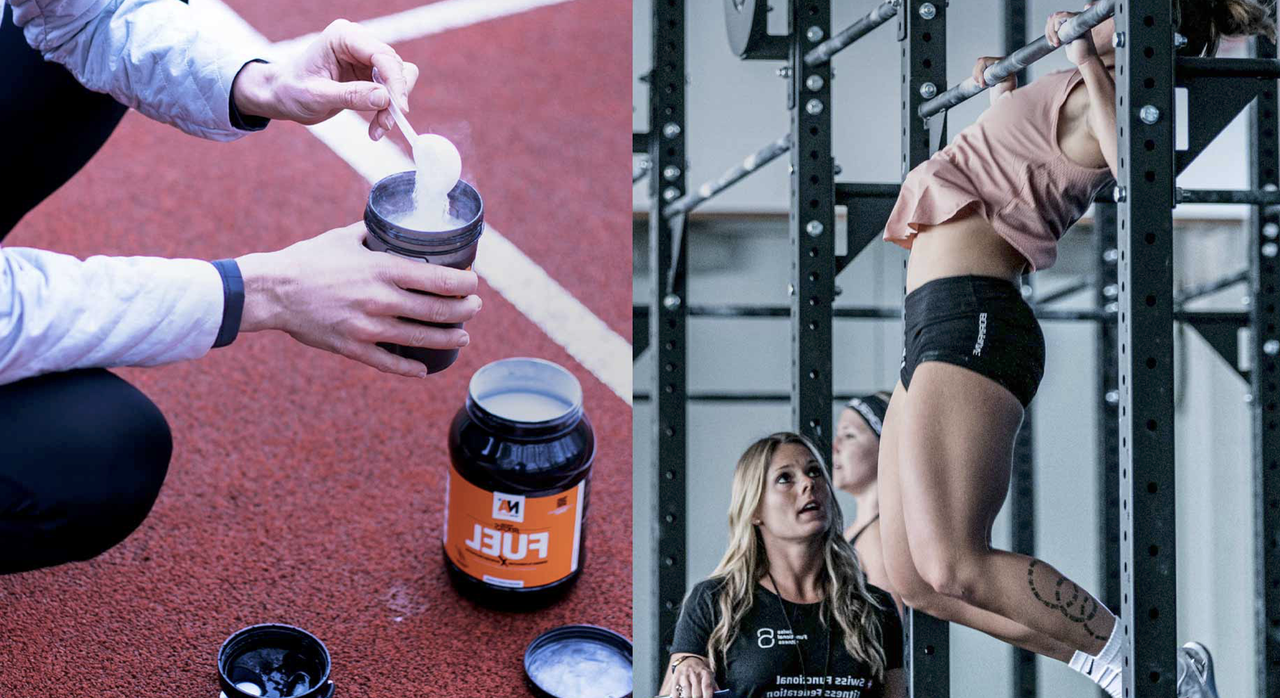
Many overseas brands struggle in China because they apply their home-market model too directly. NA took a more adaptive approach. During localisation, it adjusted its visual identity and messaging to better suit the preferences and language habits of younger Chinese consumers. On the channel side, it connected with the platforms and sales routes that matter locally, including Taobao-based e-commerce, social retail, and private community channels.
Its campaign rhythm was also aligned with major mainland shopping events such as 618 and Double 11 rather than an overseas promotional calendar. The brand also made its products feel more relevant to everyday Chinese fitness behaviour. In China, fitness culture often places strong emphasis on nutrition, reflected in the familiar idea that results come three parts from training and seven parts from diet. NA responded by building communication around more relatable usage scenarios, including home, office, and gym environments.
Building a Sustainable Retention System
NA used its WeChat official account as the centre of a membership system, increasing user engagement through points, check-ins, and exclusive offers. It then deepened that relationship through private community operations, where users could receive product combinations and recommendations linked to their individual training cycles.
Ongoing creative articles and short-form video content also helped the brand stay present over time, maintaining contact beyond the initial sale. This is especially relevant in sports nutrition, where purchasing behaviour is often tied to routines, goals, and changing stages of training.
Final Advice: Market-Facing vs. Market-Ready
NA's experience suggests that long-term growth in China often comes not from one high-profile launch moment, but from steady, well-managed post-purchase operations. For overseas brands, entering China is never just a matter of cross-border distribution. It requires real adaptation to local platform rules, local consumer expectations, and the way products are actually used in daily life.
BINGO Digital has spent years helping overseas brands with China market research, localisation, multi-channel growth, and customer success stories analysis. Through its analysis of the NA case, the agency hopes to offer a practical reference point for more global health and wellness brands preparing to enter China with a strategy that is not only market-facing, but market-ready.
Ready to Launch Your Brand in the China Market?
BINGO Digital provides one-stop growth solutions for international brands, from strategy and content to private traffic operations.
Contact BINGO Digital for a Consultation!