
After years of working deep inside China's digital marketing ecosystem, we' ve stayed focused on one thing: helping overseas brands build real traction in the China market. In social media operations-especially on Weibo-we' ve accumulated a lot of hard-earned, on-the-ground experience.
And we've also seen the same painful story repeat itself. Many overseas brands enter with high expectations and real budgets, but end up losing time, money, and momentum-not because their product isn't strong, but because they picked the wrong operating partner. What they truly lose isn't just ad spend. It's the window to establish credibility and mindshare at the exact moment the market was ready to notice them.
For roughly 80% of overseas brands that "get burned" on Weibo, the root cause is rarely budget. It's almost always the partner.
A common trap for international CMOs is treating Weibo as simply another publishing channel. They assume that as long as a vendor can translate, format a post, and schedule it on time, the job is done.
But China's current social landscape doesn't work like that. Each major platform plays a very different role.
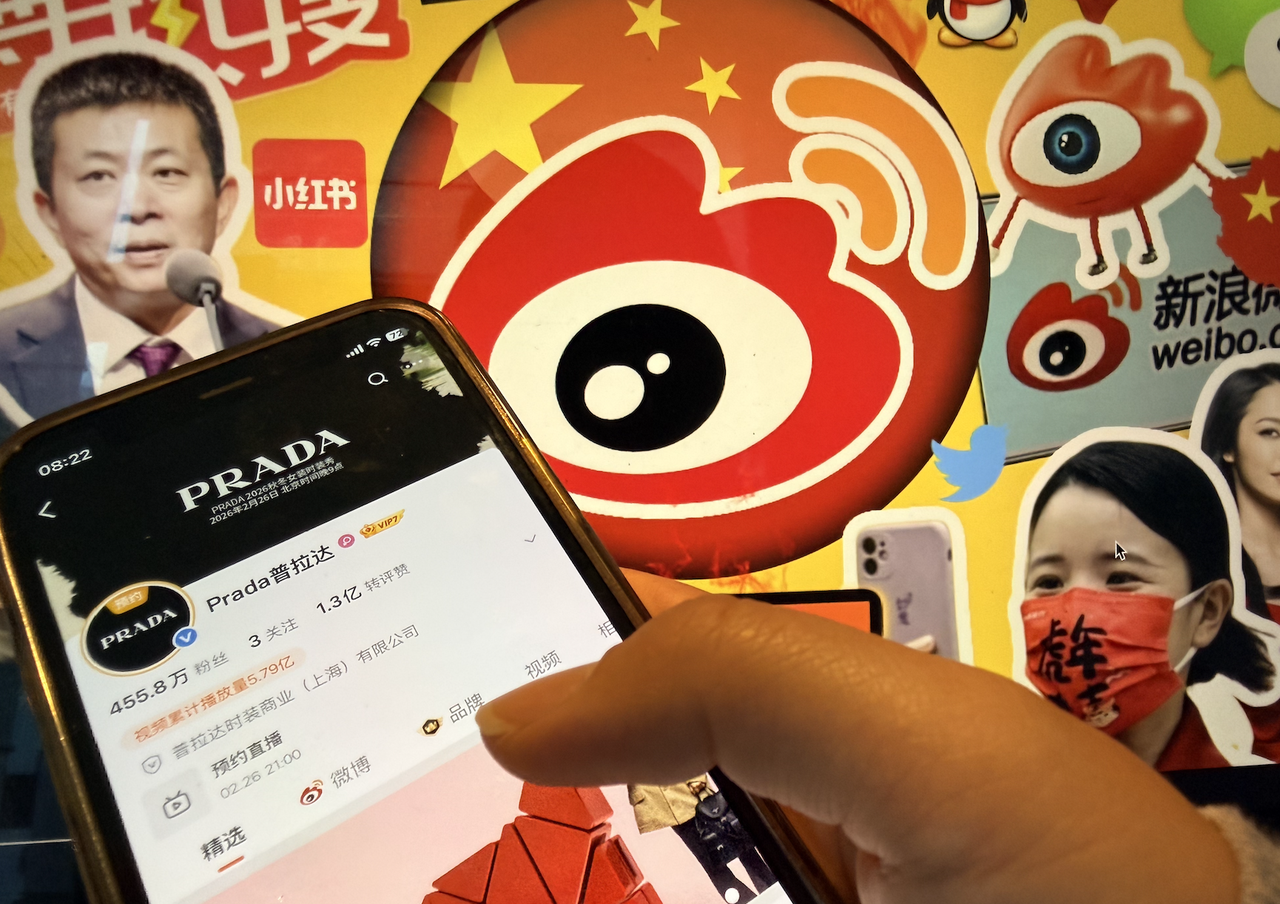
WeChat functions like a private garden: its strength is in retaining users, nurturing loyalty, and deepening relationships with existing customers. Douyin is closer to a traffic theatre: it excels at rapid exposure, conversion, and new-customer acquisition. Weibo, however, operates more like a public square-where reputation forms in real time, public sentiment shifts fast, and the story that search engines pick up can directly influence whether a brand survives or stalls in China.
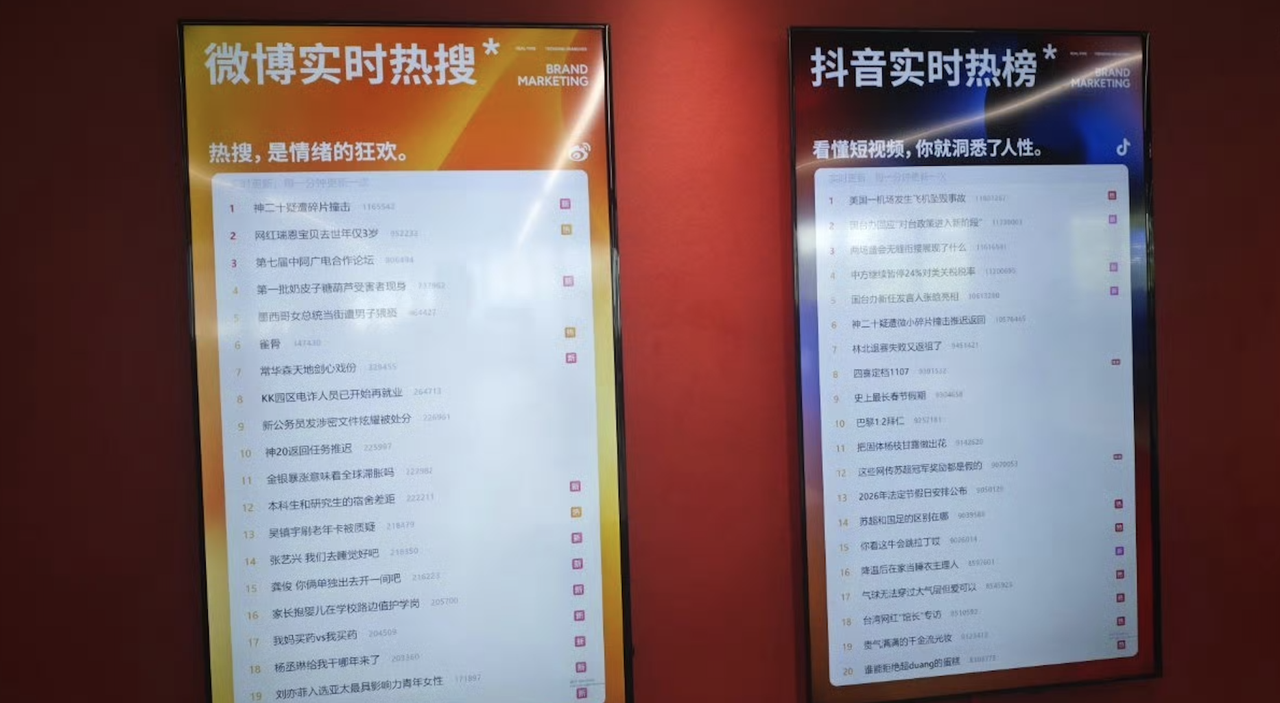
With close to 600 million monthly active users, Weibo is not only where hot topics begin-it's where public opinion fights happen. It's also the first public-facing PR battlefield for brands. It can make a brand go viral overnight. It can also turn a single customer complaint into a trending topic in four hours, wiping out months-or even years-of careful market building.
That's why in 2026, what overseas brands need is not a generic Weibo "managed posting" service. The right choice is a professional strategy team that understands PR, trending mechanics, compliance boundaries, search positioning, and-most importantly-how Chinese users feel, react, and mobilise.
Below, we' Il break down the selection criteria clearly and practically, so you can avoid the most expensive mistakes and choose the right partner from the start.
Start with positioning: avoid "posting labour," choose a true brand partner
A standard outsourcing vendor treats Weibo as a posting board. Their workflow is straightforward: translate global assets, adjust the layout, publish on schedule. Their priority is operational safety-no mistakes, no trouble, deliver what was asked.
But brand growth and sentiment shaping aren't usually part of their responsibility.
A professional Weibo team operates with a PR-first mindset. They don't merely "run an account." They turn Weibo into a brand newsroom, while building a defensive layer against public opinion risk. Everything they do serves long-term brand outcomes: awareness construction, reputation maintenance, trending-topic planning, crisis response, and search footprint management.
This difference is easier to spot than most people think. Ask whether the agency is PR-led. If their Weibo operations are disconnected from PR thinking, it's essentially putting your brand on a public stage without protection. In China's opinion environment, that's not a small risk- it's an everyday risk.
If they don't understand "Weibo Baidu SEO linkage," they don't understand public traffic entry points
This point is especially critical for overseas brands, and it's exactly where many ordinary vendors fall short: Weibo content can be indexed by Baidu in real time.
That means your Weibo feed doesn't just live inside a social platform. It becomes part of your brand's public search reputation. When users search your brand on Baidu, real-time Weibo content often appears directly on the first page.
In other words, Weibo is not only social media-it is a search asset.
A professional team will actively plan for this. They will structure keyword coverage across brand terms, product terms, and category terms, integrating them naturally into daily content and topic hashtags. They will also manage hashtags in a structured way so that short-term social content turns into long-term search occupancy, continuously capturing valuable public traffic.
If a potential partner never mentions Baidu, never discusses search positioning, and never talks about keywords, you can eliminate them immediately. They are ignoring one of the most valuable public traffic levers you have.
Content creativity: looking good isn't enough-interaction and breakout potential are what matter
Weibo is not WeChat. Its user behaviour is fast, impatient, and highly selective. Users scroll quickly; attention windows are short. Long-form "brand essays" are often ignored.
What works better tends to be content that carries emotional pull, a clear viewpoint, a small tension point, or a discussion trigger-something that makes people react, not just read.
A professional team will never simply copy-paste overseas content. They adapt it to Chinese context and culture, rewriting with local logic and local language instincts, making the brand feel present, human, and relevant.
They are also skilled at riding trends-but safely. They do not chase hot topics awkwardly, and they don't cross vulgar or sensitive boundaries. Instead, they find the real overlap between the trend and the brand, using the moment to expand visibility without creating compliance risk. Beyond that, they can proactively plan content that is inherently shareable and topic-driven- content designed to travel, and sometimes even to climb trending lists.
High-interaction formats-nine-grid posts, short video, polls, compliant giveaways, and UGC campaigns-are tools they use fluently and strategically, not randomly.
When evaluating content ability, don't be impressed by "views" alone. The most important indicator is historical engagement rate. Real comments, reposts, and likes are the only proof that Chinese users accept the brand and want to interact with it.
Interaction design: the essence of Weibo is "conversation," not "broadcast"
Many overseas brands have Weibo accounts that feel deserted. They post regularly, yet nobody responds.
That usually happens when the operating team only knows how to publish, not how to interact. A professional team designs interaction from the user's perspective-low friction, easy to join, high sense of participation. They treat comment-section management as a core battlefield: replying actively, "flipping" user comments, using culturally appropriate humour and memes, guiding the tone of the discussion, preventing cold silence, and never allowing negative threads to spread unattended.
Activating "Super Topics" and fan communities matters too. With check-in missions and community mechanisms, they motivate fans to speak up for the brand and generate organic traffic. When needed, they can also use compliant giveaway mechanisms to quickly build a base of initial followers-laying groundwork for future operations.
Weibo's logic isn't complicated. If users are willing to talk to you and spread your content voluntarily, you earn real heat-and you gain the ability to stand out among crowded competitors.
Crisis and compliance: the survival baseline for international brands in China
In China, compliance is not a "nice to have." It's survival infrastructure. And because Weibo is the main public opinion battlefield, it's more demanding and less forgiving than most platforms.
One careless phrase, one sensitive position, one product complaint-any of these can ferment quickly and erase months of investment. Ordinary vendors often lack compliance awareness and crisis capability. When trouble hits, they delete posts, deflect blame, or disappear. That's how small issues become major crises.
A professional team builds defence in advance. They operate with 7x24 public sentiment monitoring and early-warning mechanisms to catch negative emotion before it spreads. They implement multi-level review before publishing, avoiding advertising-law red lines, absolute terms, and sensitive topics-reducing risk at the source.
If negative events still occur, they respond fast with appropriate language, address the issue properly, dilute negative visibility with high-quality content, and when necessary coordinate credible industry voices for endorsement. With a structured escalation process, they minimise impact instead of amplifying it.
For international brands, a reliable public-opinion defence system is often more valuable than ten viral posts. Viral content brings short-term heat. Compliance and crisis strength keep the brand stable-and alive-long enough to actually win.
Platform resources and paid support: spend less, build steadier visibility
Organic growth alone rarely helps a brand establish itself quickly on Weibo. Strategic paid support and resource coordination are what lift visibility to the next level. But spending money blindly is not the answer-and this is where professional teams and generic vendors truly separate.
A strong team understands the full range of Weibo media products, especially the precise delivery mechanics of Fan Headlines (FST). They can target competitor audiences and interest- based segments, ensuring every unit of budget is spent with intent.
They understand trending mechanics and ranking logic. They won't chase trending lists recklessly. Instead, they design a sensible strategy aligned with your brand goals-so trending works for you, not the other way around.
They also have real resources: celebrity and KOL networks, vertical-category creators, and the ability to match partners to brand tone-not just "big names." More importantly, they can manage cooperation quality and outcomes, preventing ineffective collaborations that burn budget without leaving value.
Budget optimisation is a discipline they take seriously: monitoring data, adjusting in real time, maximising efficiency, and cutting waste. A true professional team does not buy heat with money. They create stable visibility with smart leverage.
Understanding international brands: fit often matters more than capability
This is easy for overseas brands to overlook, but it determines how smooth the partnership will be-and whether outcomes match brand positioning.
Some teams are strong executors, but they don't understand the tone and demands of international brands. The result is content and strategy that drift away from global brand identity, and sometimes even damage premium perception.
A professional team should be bilingual, capable of communicating smoothly in both Chinese and English, coordinating effectively with HQ and China teams, and keeping information synchronised without distortion.
They should understand global brand tone and compliance boundaries. They should never chase traffic through vulgar content. They should never trade short-term clicks for long-term brand value.
Operationally, they deliver with structure: clear timelines, regular reviews, transparent data reporting, and efficient alignment on priorities.
The best Weibo teams for international brands aren't just good at traffic. They understand brand: tone, needs, processes, and long-term goals. That's what makes them a reliable partner in China.
Final advice for global brands
Based on years of hands-on work with overseas brands entering China-or trying to break through growth bottlenecks-our advice is simple and direct.
Stop treating Weibo as a basic publishing channel. It is your public PR home base, and a strategic lever for winning public traffic in China. When choosing an operating partner, prioritise PR-led professional teams. The right team understands Weibo and Baidu search linkage, can build truly localised and high-engagement content, can activate users through intelligent interaction design, can protect compliance and crisis boundaries, and can work in ways that fit international brand workflows.
A generic vendor can post on Weibo for you, but won't create meaningful value. A professional Weibo strategy team can protect your reputation, secure your search footprint, and help you move forward steadily in a market this large-towards real growth.
If you' re preparing to enter China, or you're already operating but facing stalled growth, unstable reputation, or the need to rebuild your Weibo strategy and system, we're open to a conversation.
With end-to-end China digital marketing capability, dual search logic across Google and Baidu, and years of social operations experience, we can help your brand stand firm in Weibo's "public square," spread with credibility, and go further-opening the door to the China market in a way that is sustainable, resilient, and built for the long run.
Looking for a Weibo reputation partner you can trust in 2026?
BINGO Digital helps international brands turn Weibo buzz into trust, resilience, and real revenue.
Contact us to get a Weibo operartion plan that truly works.