
International brands usually come to China in one of two mindsets. Some arrive with a proven global growth playbook, confident that what worked in mature markets will translate. Others come in under pressure, because China revenue is softening and they need a dependable channel to recover demand. In both cases, the same confusion often hits early: the SEO strategies that consistently deliver on Google can stall on Baidu.
It's not for lack of effort. Teams put in time, budget, and internal alignment, yet rankings barely move. Sometimes the situation gets even more frustrating-visibility drops because of compliance issues, and the site quietly loses reach long before anyone realises what happened. Over the past few weeks, I've heard multiple clients vent about this exact problem. A few said they chose the wrong SEO company, saw no meaningful uplift, and nearly ended up with penalties that would have damaged their search foundation for months.
This is why the question of "who you hire" matters more than most people expect. Baidu SEO is not a simple localization of Google SEO. It runs on a different logic, shaped by China's regulatory requirements, Baidu's algorithm priorities, and the way Chinese users search, compare, and decide. The operator you pick will directly influence whether your investment turns into real traffic and revenue, or becomes an expensive lesson.
Why international brands need a specialised Baidu operator
A lot of brands take a detour at the start. They either ask the global team responsible for Google SEO to take over Baidu, or they go with a small local vendor because the quote looks "efficient." The outcome is often predictable: either the site steps over compliance boundaries and gets hit, or the brand spends half a year without seeing meaningful progress- missing a window that China rarely gives you twice.
The underlying reason is not effort. It's mismatch. Baidu and Google reward different things, and international teams often carry blind spots simply because China's rules and ecosystem are not part of their daily operating context.
Compliance is the first hurdle you cannot skip
Baidu generally expects the site to meet baseline access requirements-ICP filing, mainland hosting, and content that aligns with China's advertising law and cybersecurity compliance norms. Overseas teams often underestimate how decisive this is. If a site crosses the line, it can be removed from indexing, and rebuilding trust is rarely quick. In some cases, recovery can drag on far longer than the original campaign timeline.
The ranking logic is different as well
Google tends to reward broad web authority, link quality, and depth across the open internet. As emphasized in Baidu's official Search Engine Optimization Guide, Baidu places heavier weight on domain trust, local originality, structured data, and how well you operate inside its ecosystem-your official site working alongside Baidu-owned properties such as Baijiahao and Baidu Baike. If you copy a Google-first approach into Baidu without adaptation, performance usually drops sharply.
Localisation is another barrier that isn't solved by translation
Chinese search behaviour is different in intent, phrasing, and expectations. Literal or machine-translated content often fails because it reads unnatural, misses what users actually mean, and can even be judged as low- quality. In Baidu, "Chinese text" and "Chinese intent" are not the same thing.
Risk control is the part many brands only learn after damage appears
Baidu is extremely strict about fast-ranking hacks, fake traffic, doorway structures, and other black-hat or grey tactics. Some unreliable operators will promise quick wins using these methods. The short-term movement can look impressive. The long-term outcome can be permanent damage: penalties, de-indexing, and a brand site that struggles to regain trust.
A strong Baidu SEO operator behaves less like a content vendor and more like a China market guide. They understand the technical requirements, they know how to localise for Chinese users, and they can execute real optimisation work instead of selling "pretty plans."

SEO agencies you should avoid, even if they sound convincing
From client stories and industry experience, there are a few patterns that show up again and again. When you see them, it's safer to walk away early.
The most common red flag is the "short-term guarantee." If a company claims they can rank you number one for all popular keywords in a week, treat it as unrealistic at best and risky at worst. Baidu SEO is a long-term trust-building process. For new sites, it's normal to take three to six months before rankings become noticeably stable. Ultra-fast promises often imply shortcuts.
Black-hat operators are another obvious danger. When a company talks about hidden keywords, bulk junk links, directory flooding, or similar tactics, the risk is not theoretical. These methods can trigger search engine penalties. Sometimes it's a ranking drop that's hard to reverse. Sometimes it's a full removal.
Lack of transparency is a quieter but equally serious warning sign. If a vendor won't show you what they're doing, won't provide an execution plan, and won't share regular reporting and analysis, you're handing over your brand's search asset with no visibility. You won't know whether progress is real, whether risk is accumulating, or whether work is being done at all.
There are also teams that obsess over a single tactic while ignoring the rest of the system. Some talk only about keyword density. Others push content volume without caring about structure, user value, or mobile performance. SEO results rarely come from one lever. Even if a short-term spike appears, it tends to fade if the foundation is weak.
No verifiable proof is another reason to pause. If a company cannot share any credible track record-industry-relevant cases, client references, or verifiable outcomes-then you're betting on hope. Hope is not a strategy, especially in a market as unforgiving as China search.
Finally, be cautious with pricing that is far below market norms. As the famous business adage goes, "If you think it's expensive to hire a professional, wait until you hire an amateur." SEO is labour, expertise, tools, content capability, and ongoing execution. If the quote is dramatically low, the service is usually being cut somewhere: templated content, bulk low-quality links, or "one-size-fits-all" plans that don't respect your industry and compliance constraints. The brand usually pays the cost later.
How to quickly spot a reliable Baidu SEO operator
You don't need deep SEO knowledge to choose well. You need the right questions, and you need to listen for answers that show real operational ability rather than rehearsed marketing.
The first thing to test is compliance and access capability.
Ask what an overseas brand must have in place before Baidu SEO is even workable. Ask how ICP filing is handled, what hosting requirements they recommend, and how they ensure content meets local compliance. A credible team will treat this as the first step, not an afterthought. They should be able to explain the process clearly, describe how they screen sensitive wording and advertising-law risks, and proactively warn you about common traps such as exaggerated claims and prohibited "absolute" language. Many strong teams can also provide filing coordination or compliance management support, because they know overseas brands often need help navigating the operational details.
If a vendor says ICP is unnecessary, or claims content can simply be translated without any compliance discussion, you've already learned what you need to know.
Next, test whether they truly understand Baidu's algorithm and ecosystem today.
Baidu evolves quickly, and in 2026 the environment has moved deeper into a generative-search direction. Ask how that shift changes visibility, what they see as the biggest practical differences between Baidu and Google, and whether you can win by optimising only the official site without building any Baidu ecosystem assets. Strong teams can explain Baidu's ranking factors in plain language-domain trust, originality, structured data, ecosystem coordination-and they can also describe how they adapt content for question-style queries and other formats that win prominent placement. They won't fall back on a single Google-era slogan like "links solve everything."
If the answer is basically "publish more articles and build backlinks," and they cannot speak confidently about Baijiahao, Baidu Baike, or the latest Baidu search changes, it usually means they're working from a generic script.
Then look closely at their localisation capability.
This is where SEO becomes business results. Ask how they do keyword research for overseas brands, what tools they use, and whether translation can rank. Reliable teams use local datasets and research methods, and they'll tell you directly that machine translation rarely performs. They should be able to explain how they map keyword intent, why long-tail and question-based searches often convert better, and how they write content that reads naturally in Chinese while genuinely solving user problems. You may also hear them mention practical content details-introducing the topic clearly early on, using useful methods and data rather than filler, structuring internal links so Baidu spiders can crawl the site efficiently. These are not "nice-to-haves." They're the difference between indexed content and ranking content.
If a vendor relies on guesswork for keywords, claims "the longer the better" without discussing intent, or treats translation as localisation, the quality ceiling will show up quickly.
After that, ask for proof and demand data transparency.
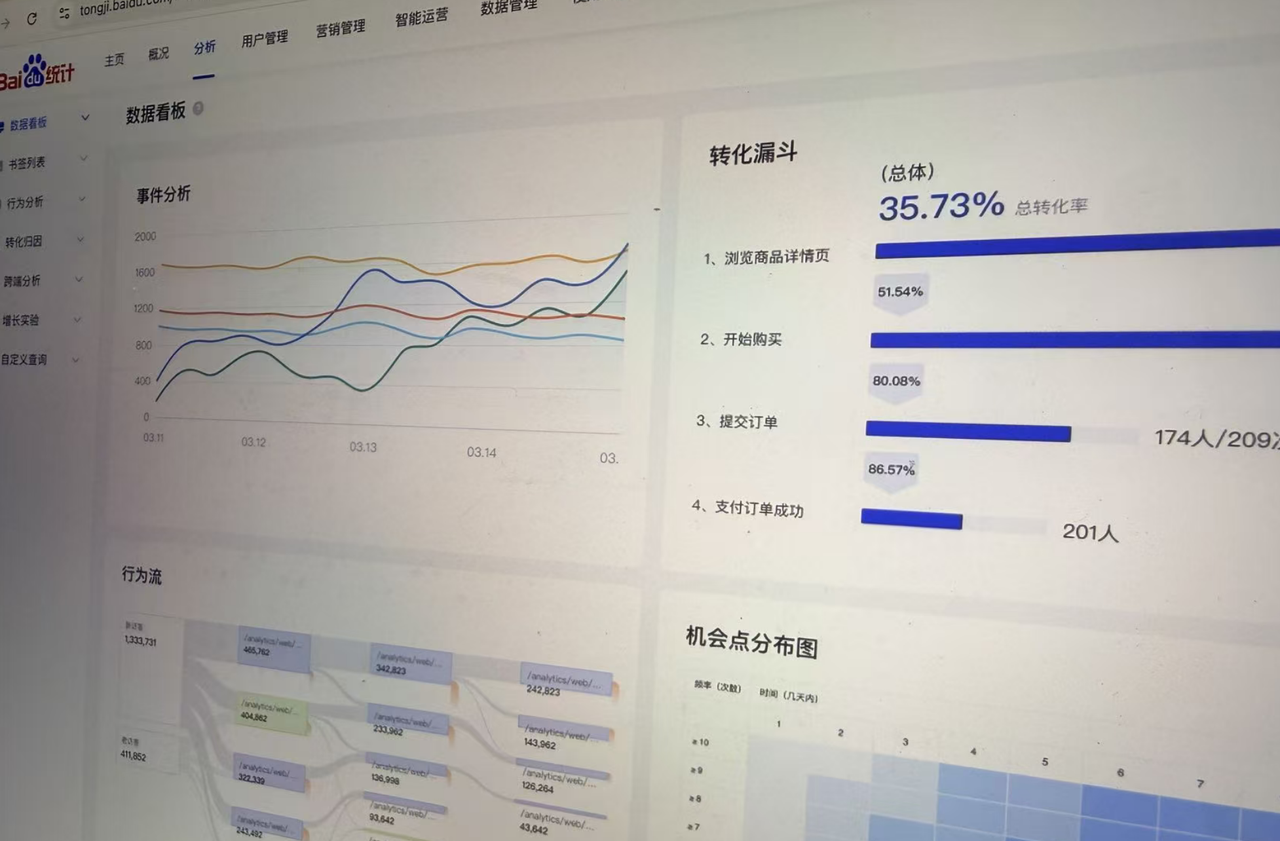
You're not looking for pretty slides. You're looking for verifiable outcomes. Request two cases involving overseas brands in similar industries, including domains (or at least something you can validate), keyword movement, organic traffic growth, and a description of what work was done. A serious operator can walk you through wins and setbacks, and they should be comfortable with reporting that shows reality: monitoring, weekly updates, monthly reviews. Many will also allow access to Baidu's backend data, because they don't need to hide behind screenshots.
If they refuse specifics "because it's confidential," offer only vague screenshots, and still promise top rankings in seven days, treat it as a sign that the story is stronger than the execution.
Finally, test their risk control and incident response.
Ask whether they use fast-ranking tactics or black-hat methods, what their process is if indexing drops or the site is hit, and how responsibility is handled if their work triggers a violation. A reliable team will clearly commit to white-hat practice, explain an orderly troubleshooting process, and be willing to put risk and accountability into the contract. They'll also talk like people who have dealt with real incidents before, not like people who assume nothing will go wrong.
On the execution side, strong teams will often mention that backlink building must be measured and quality-driven, not bulk-driven. They may describe legitimate sources-industry platforms, Baidu ecosystem placements, and steady acquisition of a small number of high-quality links per month rather than mass purchasing. They'll also take mobile performance seriously, because a large portion of China search traffic comes from mobile, and Baidu strongly favours mobile-friendly experiences. If a vendor hints at "internal channels" or tries to sell you speed over safety, it's not worth the risk.

Practical next steps for overseas brands
China search has real potential, but choosing the right operator matters more than simply increasing spend. Start by defining your goal: brand exposure, lead generation, conversion growth, or a compliant baseline footprint. Be honest about your budget, and don't chase low prices at the expense of long-term risk.
Shortlist three to five candidates and run the questions above. Listen for operational clarity: how they handle compliance, how they explain Baidu's ranking logic, how they do localisation, and how transparent they are with data. Avoid locking into long contracts immediately. A one- to three-month pilot is a practical way to validate capability. During that period, you should be able to see whether they can execute the fundamentals properly: keyword research based on local tools, technical and structural fixes, compliant content creation, sensible backlink strategy, and reporting that shows what is happening.
It also helps to set realistic expectations. Baidu SEO is not instant. New sites often need three to six months to show stable, meaningful ranking progress. Early on, it's smarter to focus on one or two high-intent long-tail keywords, validate that the strategy works, then expand coverage gradually. Reliable operators won't pressure you into chasing quick results; they'll help you build a plan that can compound.
As management expert Peter Drucker famously noted, "Culture eats strategy for breakfast." In our context, China growth rarely comes from copying global experience. It comes from adapting to local rules, local algorithms, and local behaviour. The right Baidu SEO operator is the bridge that helps you do that safely, effectively, and with measurable returns.
International brands that choose well don't just "rank on Baidu." They build a durable search asset in China-and that's what creates room for long-term growth.
Looking for a Baidu SEO partner you can trust in 2026?
BINGO Digital helps international brands turn Baidu into qualified traffic and real leads. Contact us to get a Baidu growth plan that performs.
Contact BINGO Digital