
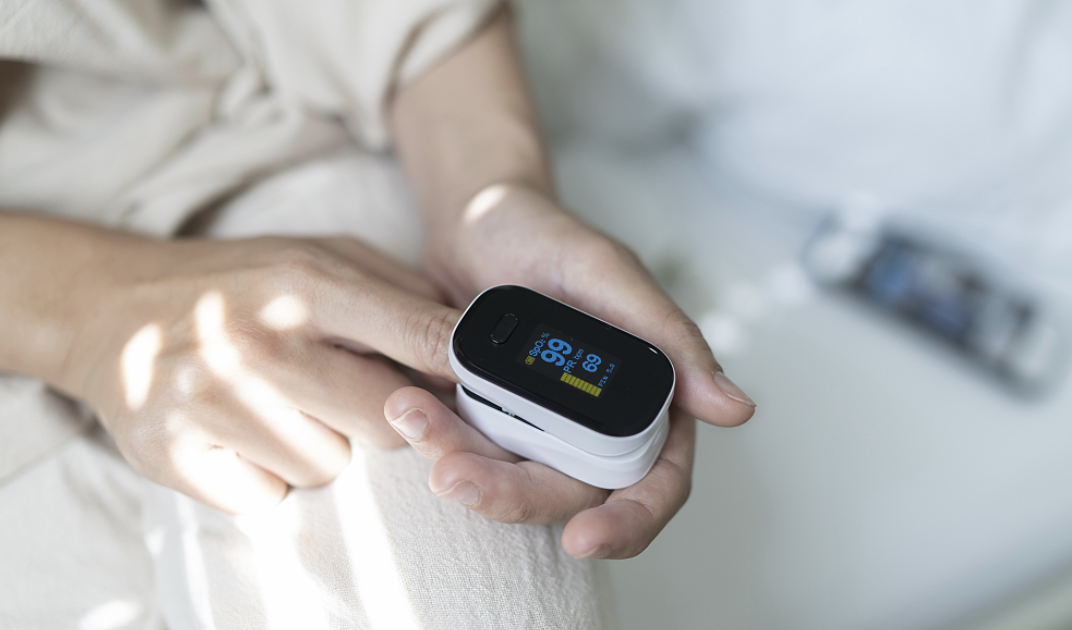
At BINGO Digital, we closely track how China's mainland consumer market is evolving, along with the shifting logic that now drives digital growth. Recently, we conducted a full-spectrum analysis of ChoiceMMed's (a Chinese healthcare device brand) Xiaohongshu campaign for its pulse oximeter range. What emerged was far more than a successful local case study. It was a highly instructive blueprint for how a medical or health brand can win attention, trust and demand in mainland China.
For domestic healthcare device brands, the campaign stands out as a strong example of how to secure early momentum in a competitive category. For overseas brands looking to enter mainland China, its value is even greater. In segments such as pulse oximeters, home health monitoring devices and other consumer medical products, ChoiceMMed's strategy aligned closely with both the needs of Chinese consumers and the realities of platform behaviour. The thinking behind it deserves serious attention from any overseas healthcare brand planning market entry.
Platform Choice Must Match Both Audience and Product Nature
One of the most common mistakes overseas brands make when entering China is assuming they need to be everywhere at once. ChoiceMMed took a more disciplined route. By selecting Xiaohongshu as its primary seeding platform, it demonstrated a much more effective principle: platform selection should not be driven by headline traffic alone. It should be based on two things working together - the overlap between a brand's target audience and the platform's core user base, and the fit between the product itself and the platform's content environment.
Xiaohongshu is now one of the largest content-led recommendation communities in mainland China, with over 200 million monthly active users. More than 75% of those users were born in the 1990s or later. This is highly relevant because the same group has become a major purchasing force in the home healthcare device category, accounting for more than half of the market. In other words, the audience fit is strong.
Just as importantly, trust plays an outsized role in health-related purchasing decisions. Nielsen research has shown that 69.8% of Xiaohongshu users regard content on the platform as authentic, while 81% say platform content can trigger purchase intent. For medical and wellness products, that matters enormously. These are not categories where consumers buy on impulse without reassurance. They need confidence, context and proof. Xiaohongshu's experience-led, credibility-driven content model is particularly effective at helping brands overcome the trust barrier that often exists in the early stages of market entry.
From BINGO Digital's perspective, overseas medical and health brands entering mainland China need to let go of the idea that success on Western platforms can simply be replicated here. Tactics that may work abroad - such as YouTube-led hard-sell video advertising or highly targeted Facebook campaigns - do not neatly map onto how Chinese consumers discover, evaluate and decide. In mainland China, platforms such as Xiaohongshu and Douyin operate through a different mechanism: content first, mindset shift second, conversion thereafter. In many cases, choosing one core platform and building depth there will deliver far better results than scattering effort across multiple channels without focus.
Avoid the Crowded Battle and Ride the Right Consumer Trend
At first glance, mainland China's medical device market can look saturated. Yet beneath the surface, many subcategories remain underdeveloped from a marketing perspective. ChoiceMMed's growth was driven in part by a sharp understanding of this reality. While a leading competitor, Yuwell, had placed greater promotional emphasis on blood glucose meters, pulse oximeters accounted for only a small share of its category marketing focus - around 10%. That left an opening. ChoiceMMed moved decisively into that gap and positioned itself as a breakout player.
This offers a particularly valuable lesson for overseas brands. China is not a single, uniform red ocean where every segment is equally crowded. Brands do not need to confront dominant local players head-on in the most mature categories. A more effective route is to analyse competitors closely, identify whitespace within a subcategory, and then enter with a differentiated proposition that also aligns with local consumer momentum.
That momentum is already visible. As noted in various McKinsey consumer reports, the "wellness-conscious post-90s generation" is no longer a passing trend in mainland China. It has become part of the mainstream consumer landscape. Urban adults aged 18 to 41 are increasingly concerned about sedentary lifestyles, poor sleep, stress, declining immunity and cardiovascular discomfort. As a result, demand for home-based health monitoring and preventative care continues to rise. For overseas healthcare brands, this means product positioning must be connected to the health anxieties and daily routines of local consumers. Whether the product is a pulse oximeter, a home blood pressure monitor or a portable health monitoring device, the commercial story should be framed around home health management, practical wellness needs for younger adults, or all-scenario family protection. Simply highlighting international technology credentials is rarely enough.
Local sensitivity also matters. Mainland consumers respond strongly to relevance. A pulse oximeter marketed only as an "imported premium device" or a "global technology brand" may not resonate on its own. ChoiceMMed's approach was more nuanced. It segmented its pulse oximeter line into baby-friendly models, wrist-worn designs and handheld versions, each tailored to a distinct audience - mothers with young children, trend-aware younger users, and older family households. This kind of localisation through segmentation is exactly where many overseas brands still need to do more work.

Stop Selling the Product and Start Creating the Need
A recurring mistake among overseas brands entering China is over-relying on product specifications, technical credentials and overseas reputation. That may seem logical internally, but it often overlooks how mainland users actually engage with content. For a product such as a pulse oximeter - where general awareness is still relatively low and the need may not feel immediately urgent - straightforward feature explanation is rarely enough to create demand.
ChoiceMMed solved this problem by changing the narrative. Rather than pushing the product aggressively, it focused on making the need visible. Its Xiaohongshu content did not begin with the device itself. It began with life scenarios that helped users understand why the device mattered.
Different product versions were connected to different everyday situations. The baby model was linked to parental concerns such as nasal congestion, oxygen deficiency and the possible impact on a child's wellbeing or development, as well as oxygen monitoring during physical activity. The wrist-worn version was tied to younger office workers dealing with dizziness, fatigue, heavy mental workloads and the hidden health risks of long periods of sitting. The handheld model was positioned around older adults, chronic conditions, sudden oxygen-related risks and the value of full-family monitoring at home. These were not abstract concepts. They reflected situations that Chinese consumers could immediately recognise from their own lives. In doing so, an unfamiliar medical device became a practical household necessity.
In BINGO Digital's view, this is one of the most important lessons for overseas medical and health brands entering mainland China. Many of these brands already have solid products and advanced technologies. The real challenge is not product capability. It is translating overseas strengths into value that mainland users can instantly understand. The question should not be, "What functions does this product have?" It should be, "In what situation would someone genuinely need this?"
That shift changes everything. A portable health monitoring device from overseas, for example, could be framed around long office hours, parenting responsibilities or ageing-at-home care. A wellness supplement could be positioned around staying functional after late nights, supporting everyday office wellbeing, or helping mothers recover after childbirth. The more clearly the content reflects local routines and emotional triggers, the more likely it is to resonate.
Format matters as well. Xiaohongshu users respond strongly to content that feels real, practical and grounded in lived experience. Overseas brands need to move away from polished, distant advertising language and embrace formats such as product recommendations, educational explainers and daily-use sharing. The content should feel close to life, not over-produced. ChoiceMMed executed this well by working with parenting influencers to demonstrate how baby pulse oximeters fit into daily caregiving, and with medical creators to explain why blood oxygen monitoring matters in the first place. When influencer identity and target audience are tightly aligned, seeding efficiency rises sharply.
Traffic Alone Does Not Build a Brand
Many overseas brands can generate short-term traffic in mainland China through paid media. The harder part is turning that traffic into sales, and then turning sales into brand equity. This is where many campaigns fall short. The missing piece is usually refined, full-funnel operation. ChoiceMMed's project is a useful example because it was not limited to ad delivery. From paid traffic acquisition and route optimisation to comment section management, the campaign built a complete operating loop.
At the traffic acquisition stage, ChoiceMMed developed a structured conversion path linking creative assets, post detail pages and then product or store detail pages. This two-step journey reduced friction and made it easier for users to move from interest to purchase. The brand also used Xiaohongshu's native ranking and smart bidding tools to secure stronger placement in keyword rankings and information flow exposure. For overseas brands, the implication is clear: entering mainland China means learning the logic of local platform tools rather than assuming that Western performance marketing experience will transfer directly. Xiaohongshu's paid amplification functions, search advertising ecosystem and traffic support tools have their own rules. The same is true of Douyin's promotional infrastructure. These systems need to be understood on their own terms.
ChoiceMMed also treated the comment section as a critical conversion and brand-building asset. This is especially important in mainland China, where users frequently consult comments before making a purchase decision. The comment area is not just a feedback space. It is part of the persuasion journey. By shaping a clear brand voice, designing effective response language and optimising the handling of negative comments, ChoiceMMed used the comment section to answer doubts, reinforce product value and create a second layer of seeding.
This is something overseas brands often underestimate. Mainland Chinese consumers pay close attention to how brands interact. A negative comment left unanswered can affect many potential buyers. A responsive, thoughtful comment strategy, on the other hand, can significantly strengthen brand favourability and trust. In a high-consideration category such as health, this kind of detailed operation is not optional.
Creative iteration is another essential part of the equation. ChoiceMMed continuously refreshed its assets in line with Xiaohongshu trends, updating popular titles and high-performing note materials so that campaign content stayed aligned with platform aesthetics and user expectations. Overseas brands entering mainland China should build a localised content asset library from the outset, then refine it constantly based on user feedback, performance data and changing content trends. Reusing one fixed set of materials for too long is a common and costly mistake.
Localisation Is Not Translation, but Adaptation
The deeper message behind ChoiceMMed's Xiaohongshu campaign is one that BINGO Digital believes every overseas medical and health brand should take seriously: entering mainland China is not simply a matter of translating language. True localisation means adapting to local demand, local platforms and local operational realities.
ChoiceMMed did not succeed because its product was inherently more advanced than every overseas alternative. It succeeded because it identified real consumer concerns in mainland China, aligned itself with Xiaohongshu's content ecology, and brought the product to market through a strategy built for Chinese users rather than one imported from elsewhere. For overseas brands, international technology, product quality and brand reputation are all genuine advantages. But those strengths only become commercially meaningful when they are expressed in ways mainland users can recognise, trust and act on.
In practical terms, there are three core principles that overseas medical and health brands should follow when entering mainland China.
1. Adapt to the audience: move from broad targeting to precise segmentation
The idea that one product message can work for everyone is rarely effective in China. Brands need to segment according to local audience realities - whether that means wellness-conscious younger adults, mothers, or older consumers within the silver economy. Products should be broken down into clearly relevant use cases and selling points for each segment, so that the connection between product and demand feels immediate and specific.
2. Adapt the content: move from technical description to scenario-led storytelling
Technical superiority alone does not sell. Overseas product strengths must be translated into situation-based value that Chinese users can relate to in daily life. That means using familiar local scenarios to frame the product and generate demand, rather than relying on specification-led communication.
3. Adapt the operation: move from broad media buying to refined execution
Brands must understand the traffic logic, native tools and user interaction patterns of mainland platforms. The goal should be to build a complete operating loop that connects content seeding, paid amplification, comment section management and sales conversion. User feedback must be treated as part of the growth mechanism, not a secondary afterthought.
Conclusion
Mainland China's medical and health device market is entering a powerful period of consumption upgrading. For overseas brands, the opportunity is real and substantial. But opportunity alone is not enough. Winning in this market requires a much deeper understanding of local demand and a sharper grasp of how marketing actually works on the ground.
ChoiceMMed's case makes one thing very clear. Whether a brand is domestic or international, long-term success in mainland China depends on the same principle: understanding Chinese consumers properly, adapting to local platform behaviour, and building a strategy that feels native to the market rather than imported into it. That is where real market entry begins - and where meaningful growth becomes possible.
Ready to build your brand's growth loop in Mainland China?
BINGO Digital provides end-to-end strategy, content, and performance marketing solutions to help overseas healthcare and medical brands succeed in the Chinese market.
Contact BINGO Digital for a Custom Strategy