
For a global Chief Marketing Officer, entering the Chinese market is often a humbling experience. As highlighted by authoritative institutions like McKinsey & Company, succeeding here requires adapting to highly specific local digital ecosystems. It is a digital "Great Wall" built not of stone, but of proprietary algorithms, unique consumer psychology, and a regulatory environment that renders Western playbooks obsolete. While the global marketing conversation is dominated by the duopoly of Google and Meta, the road to the Chinese consumer begins and ends with Baidu.
With a market share consistently exceeding 57% and a monthly active user base of over 660 million (according to Baidu's official financial reports), Baidu is far more than "China' s Google." It is the central nervous system of the Chinese internet-a platform where information seeking, social proofing, and commercial transaction converge into a single, seamless loop. For an overseas brand, Baidu Marketing is not an elective; it is the strategic foundation of Chinese existence.
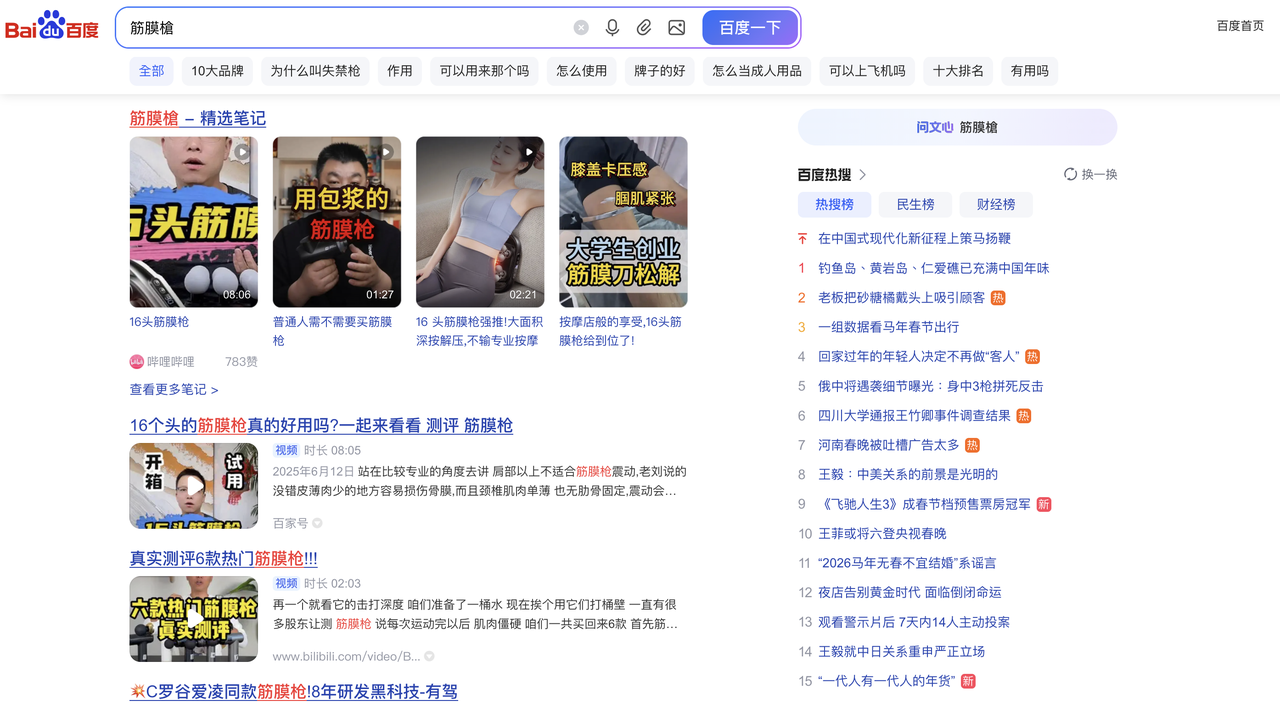
Baidu search results show a rich integration of shopping, Q&A, and brand zones directly on the first page.
From Search to Service
To understand Baidu, one must first abandon the Western concept of the "Open Web." In the West, a search engine is a signpost pointing elsewhere. In China, Baidu has spent the last decade building a "walled garden" that provides everything a user needs without ever requiring them to leave the app.
The core of this evolution is the Baidu Smart Program. These are sub-applications within Baidu that allow users to book flights, buy insurance, or order groceries directly from a search result. For an international brand, this means the "funnel" has been compressed. The journey from "Discovery" (searching for a brand) to "Conversion" (purchasing the product) no longer takes days or multiple browser tabs; it takes seconds.
This is a high-intent ecosystem. Social media platforms like Douyin (TikTok) or Little Red Book are excellent for discovery through "serendipity." However, when a Chinese consumer goes to Baidu, they are in "Problem-Solving Mode." They have a specific intent, and for brands, "Intent" is the most expensive and valuable currency in digital marketing.
Solving the Legitimacy Crisis
For an overseas brand, the greatest challenge in China is not visibility-it is legitimacy. The Chinese consumer is perhaps the most discerning and skeptical in the world, having been conditioned by a marketplace where counterfeit goods and "ghost brands" are common risks. When a consumer encounters a new foreign brand, their first action is a "Verification Search" on Baidu. If the brand does not have a robust presence on Baidu Baike (the authoritative encyclopedic arm) or Baidu Zhidao (the Q&A platform), the consumer assumes the brand is either a scam or too small to be trusted.
The "Authority Stack"
- Baidu Baike: This serves as the brand's digital birth certificate. It provides a neutral, verified history of the company.
- Baidu Zhidao & Wenku: These platforms allow brands to seed professional knowledge. If a luxury skincare brand answers a user's complex question about "hyaluronic acid concentration" on Zhidao, they aren't just selling a product; they are establishing expertise.
- The Brand Zone (Pinzhuan): This is the "digital flagship store" of search. When a user searches for your specific brand name, the top half of the mobile screen is occupied by a rich, visually dominant, and verified brand block. It signals to the user: "This brand is official, they are here, and they are invested in China."
Baidu vs. Google
To manage a Baidu campaign with a Google mindset is a recipe for budget depletion. The platforms operate on fundamentally different philosophies.
| Strategic Dimension | Baidu: The Integrated Ecosystem | Google: The Global Indexer |
|---|---|---|
| Logic of Search | Context & Scenarios. Users search in long, conversational strings (e.g., "Best high-protein milk for toddlers in Beijing"). | Keyword Efficiency. Users are condition brevity (e.g., "best organic milk"). |
| Content Priority | Internal Ecosystem. Baidu prioritizes its own properties (Baike, Tieba) to ensure content safety and speed. | External Authority. Google prioritizes E- across the open web. |
| Technical Moat | The ICP License. A mandatory government filing. Without it, your site won't load, and your ads won't run. | Open Access. day. Global standards (GDPR, S |
| Ad Mechanics | Brand Protection. Baidu offers aggressive tools to "lock down" your brand keywords from competitors. | Open Bidding. Competitors can easily bi brand terms in a more fluid auction. |
The most critical distinction remains the ICP (Internet Content Provider) Filing. For a foreign brand, this is the "entry fee." Baidu' s algorithm heavily penalizes sites hosted outside of China due to latency caused by the Great Firewall. Strategic success requires local hosting and a legal footprint-a commitment that Baidu demands and rewards.
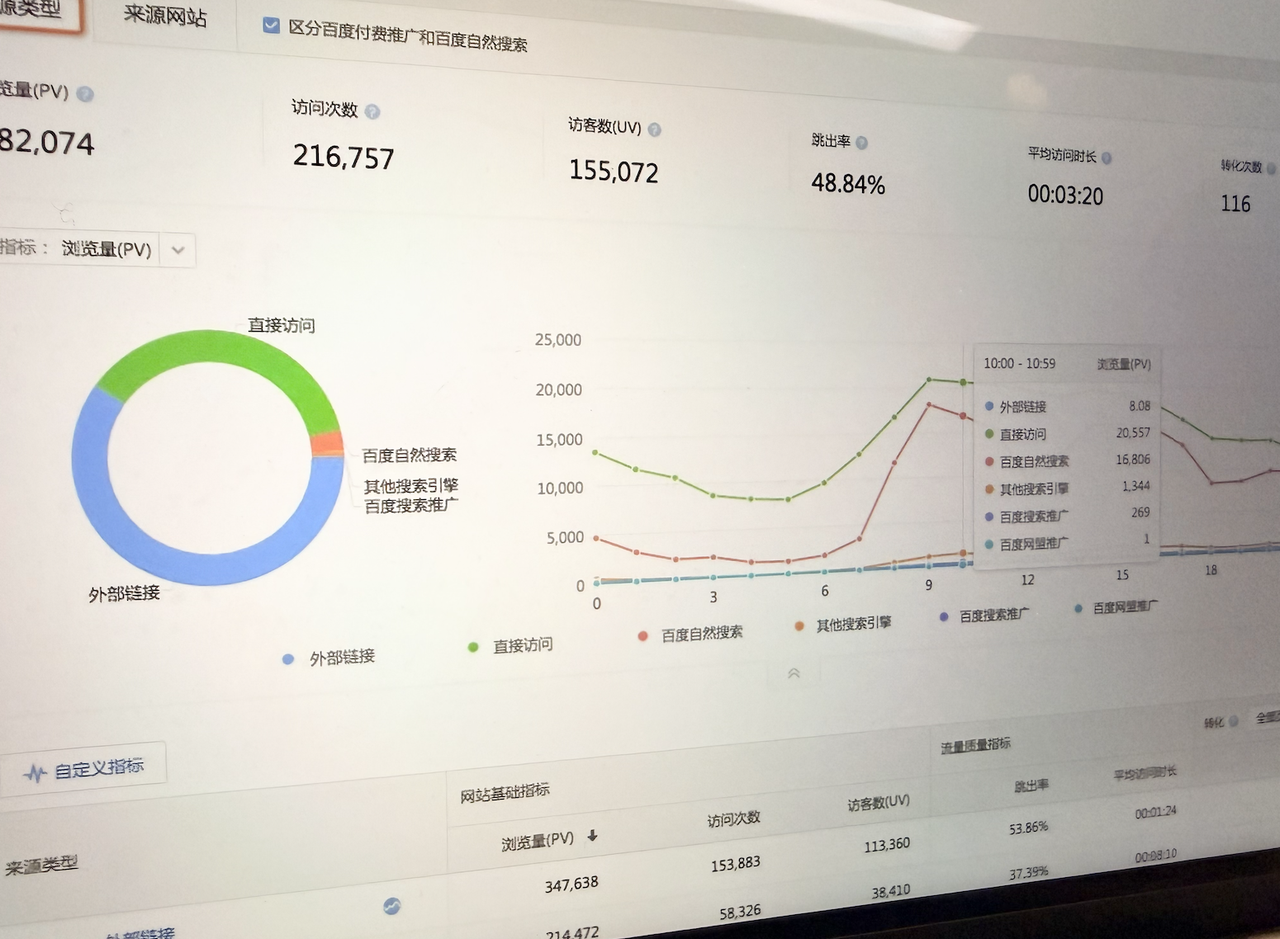
Baidu's backend dashboard provides full-funnel tracking from natural search to paid advertising.
A Full-Funnel Approach
Baidu has moved beyond the simple "blue link" advertisement. Today, it offers an Al-driven arsenal designed to capture users at every psychological stage.
1. The Precision of SEM (Search Engine Marketing)
Baidu's Fengchao (Phoenix Nest) system is the engine of high-intent traffic. It isn't just about bidding on keywords; it's about Liansuotong-an ad format that embeds lead-generation forms and "one-click" consultation buttons directly into the search result. For B2B or high-ticket service brands, this reduces the drop-off rate by up to 40%.
2. The Power of Information Feed (Native Ads)
While search captures intent, the Baidu Feed uses Al to predict it. By analyzing a user's search history, Baidu knows what they are likely to want next. If a user searches for "Paris hotels," their Baidu newsfeed will soon be populated with native ads for high-end luggage or travel insurance. It is a "push" strategy built on "pull" data.
3. The Digital Human & Al Creative
Baidu is an Al-first company. Their Qingduo platform allows brands to use Al to generate thousands of ad variations in seconds. More impressively, brands are now using Digital Humans -Al-generated avatars-to conduct 24/7 live streams or interactive ad experiences, providing a futuristic "face" to foreign brands.
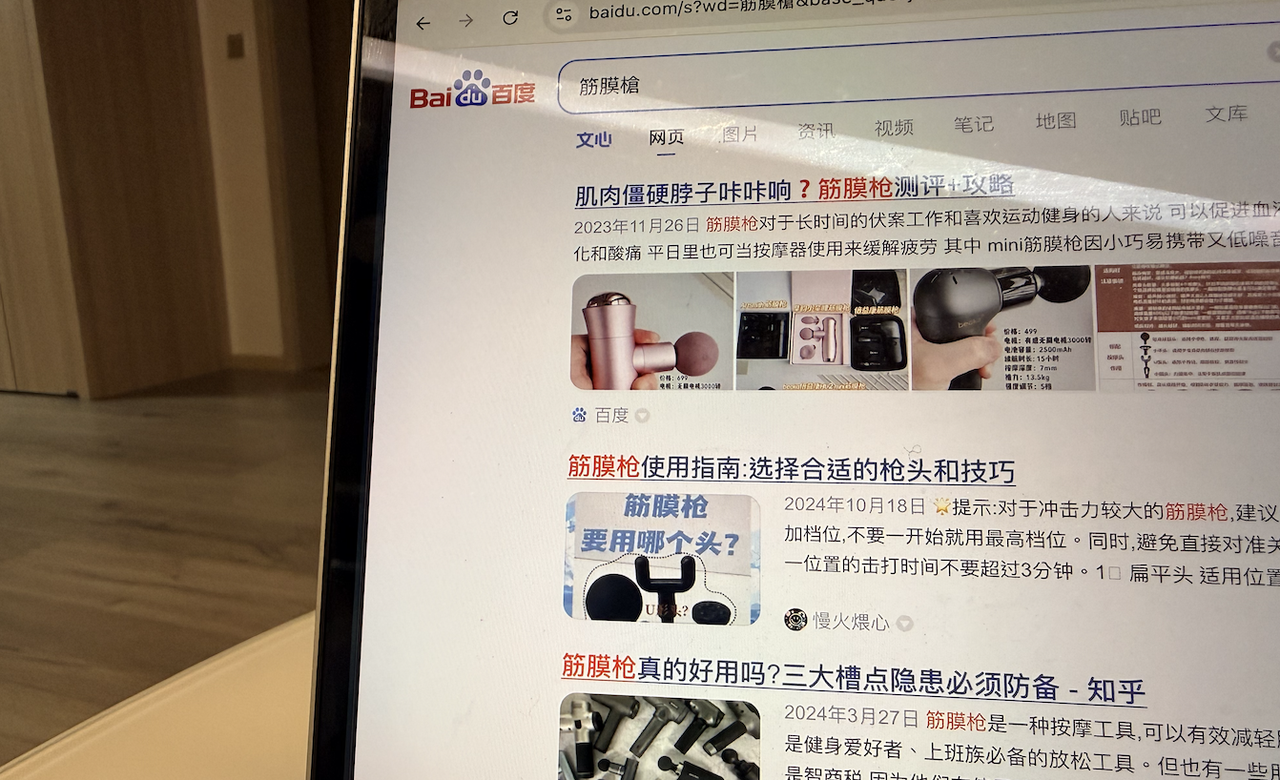
Baidu's mobile interface integrates AI-driven 'Wenxin' results and scenario-based search content.
Avoiding the "Western Bias"
The most common failure for overseas brands is over-optimization. In the West, we are taught to "tinker"-to change bids daily, swap creative weekly, and narrow targeting constantly. On Baidu, this is fatal.
Baidu' s Al requires a "Learning Phase." When you launch a campaign, the algorithm is exploring the 1.4-billion-person haystack for your needle. Every time you change a bid or a keyword, you reset that learning.
The Golden Rules of Baidu Management:
- Respect the Model: Give a campaign at least 3-5 days of "untouchable" time to find its audience.
- Scale via Expansion, Not Modification: If a campaign is working, don't touch it. Create a new campaign to test a higher bid or a different audience.
- The Conversion North Star: Don't be seduced by high Click-Through Rates (CTR). In China, "click-fraud" and "curiosity clicks" are real. Optimize for "Deep Conversions"-consultations, form fills, or actual purchases.
The Patient Capital
Baidu is not a platform for "quick wins" or "arbitrage." It is a platform for Market Building. For an overseas brand, the investment in Baidu is an investment in your brand' s permanent infrastructure in China.
The digital landscape of China will continue to shift, and new platforms will rise and fall. However, as long as humans have questions, they will search for answers. In China, those answers are found on Baidu. If you aren't there with the answer, your competitor certainly will be.
Ready to command the search for your brand on Baidu?
BINGO Digital helps international brands navigate the Baidu ecosystem, so you scale through verified trust, not just rising keyword costs.
Contact BINGO Digital to engineer your Baidu growth blueprint.