Why 2026 is the Year of 'Faceless' Growth for Global Education in China
For global education providers looking at the Chinese market in 2026, the traditional pillars of entry—prestige, pedigree, and the "Star Teacher" model—are no longer merely expensive; they are becoming obsolete. A quiet but violent shift in the tectonic plates of Chinese consumer behavior is rendering the billion-dollar marketing playbooks of the last decade ineffective.
On platforms like Douyin (TikTok's domestic sibling) and Xiaohongshu (Red), the Customer Acquisition Cost (CAC) is no longer rising linearly; it is escalating exponentially. The era of the "Mega-Influencer Teacher" and the high-gloss, studio-produced lecture series has hit a wall of diminishing marginal returns. This is not a failure of creative execution; it is a fundamental breakdown in the Trust Architecture of the Chinese middle class.
From Authority to Peer Validation
The high-stakes nature of Chinese education—where a single exam can dictate a family's socioeconomic trajectory—creates a high-friction decision-making environment. According to BINGO Digital's 2025 Consumer Behavior Analysis, a staggering 52.4% of users base their final education purchase on the testimonials of "Ordinary Users" (KOCs/Key Opinion Consumers). Conversely, only 22% place their faith in official brand communiqués.
In the 2026 landscape, "Professionalism" is often perceived as a "Marketing Trap." When a brand account shouts about its proprietary curriculum or its 99% success rate, the modern Chinese parent does not feel reassured; they feel hunted. They have developed a sophisticated "Ad-Blocker" in their psyche, honed by years of aggressive over-promising from domestic ed-tech giants.
To survive, global brands must pivot from a Persuasion Model (where the brand tells its story) to a Validation Model (where the market tells the brand's story). We define this as the "Faceless" Decentralized Strategy. The goal is not to hide the brand, but to dissolve the brand into a network of authentic, peer-to-peer interactions that bypass the consumer's defensive wall.

The Anatomy of "Faceless" Content
The "Faceless" strategy shifts the spotlight away from the instructor's charisma and onto the student's provable transformation. In the algorithm-driven world of 2026, "Raw" beats "Refined" every time.
The Mental Chain
The psychological journey of a parent on social media follows a specific path:
Anxiety → Empathy → Discovery → Verification
Phase 1: The Anxiety Mirror (The Hook)
Standard marketing starts with a solution. Decentralized marketing starts with a shared wound. Instead of a smiling student holding a trophy, we lead with a "Representative Anxiety."
Imagine a post featuring a grainy, unedited photo of a math test—ink-smudged, with a red "70" circled at the top. This is the "Relatable Failure." The copy doesn't sell; it commiserates: "We've tried the weekend intensives. We've changed three tutors. And yet, geometry remains a foreign language. Are we teaching him the wrong way, or is he just not built for this?"
This content generates 400% more dwell time than polished advertisements. It acts as a high-intent filter: it only stops the scroll of a parent who is currently experiencing that exact pain point.
Phase 2: The Logic of Evidence (The Pivot)
Once the user is hooked by the shared struggle, the narrative shifts to the "Evidence of Change." Here, the teacher is not the hero; they are the Invisible Architect. The visual shifts to the "After" state—neat notes, a "95" score, or a video of a child explaining a complex concept to their parent.
The brand is introduced as a footnote, perhaps a subtle logo on a worksheet or a mention of a "new visualization method" in the comments. By positioning the brand as a "Found Resource" rather than an "Imposed Solution," the brand gains the "Treasury Effect"—the user feels they have discovered a secret weapon, increasing their emotional investment in the product.
The Architecture of the "Social Proof" Echo Chamber
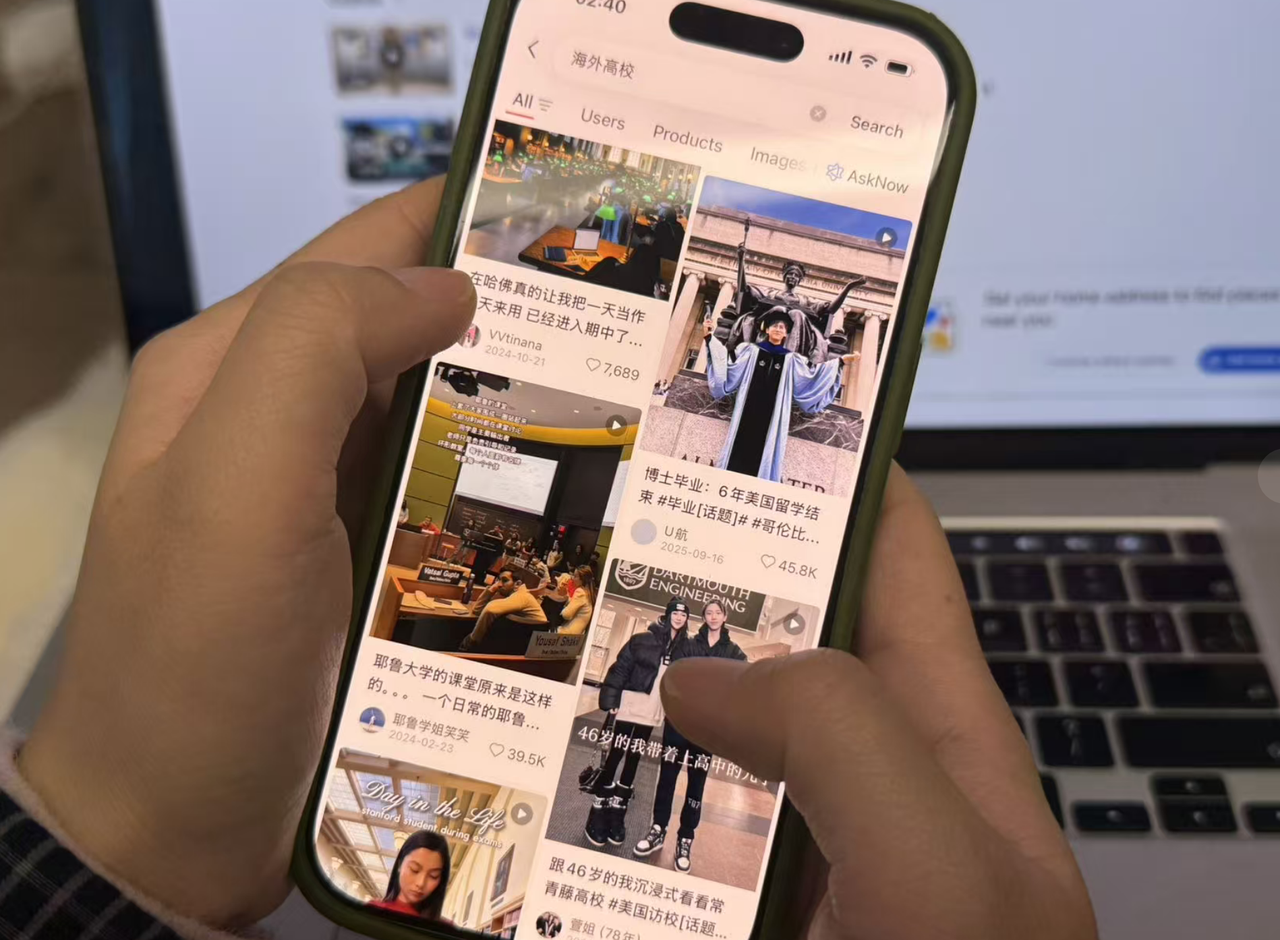
On Xiaohongshu, the "Main Note" is merely the bait; the Comment Section is where the transaction is actually won or lost. BINGO Digital manages this through a Three-Tier Reputation Architecture designed to simulate an organic, multi-dimensional conversation.
- a. The Peer Validator: The "First Responder" who confirms the efficacy. "My daughter was in the same boat last semester. That visualization toolkit was the only thing that actually worked for her."
- b. The Necessary Skeptic: A critical component often missed by brands. An organic conversation always has a doubter. "Is this just a short-term boost for the midterms, or does the logic actually stick?" This skepticism removes the "too-good-to-be-true" veneer, making the thread feel authentic.
- c. The Rational Converter: The voice of reason that settles the debate. "It's not a miracle cure, but the pedagogy is sound. My son finally understands the 'why' instead of just memorizing formulas."
The brand's official account must exercise extreme Strategic Restraint. A single, brief comment from the brand—praising the student's persistence—is more powerful than a wall of promotional text. In the decentralized era, silence is often a form of authority.
The Biological Standard
A significant pitfall for global brands is the attempt to "Automate" authenticity. In 2026, the anti-fraud algorithms of ByteDance (Douyin) and Xiaohongshu are nearly sentient. The use of bots, emulators, or "cloud phones" is a terminal mistake that leads to "Shadow Banning" or total account erasure.
To build long-term Brand Equity, operations must adhere to Biological User Standards:
- Hardware Singularity: Each account must live on a unique physical device with a dedicated mobile IP. Any overlap in "Device Fingerprints"—such as multiple accounts logging in via the same office Wi-Fi—will trigger an immediate "Bot Label."
- The "Sandbox" Incubation: A new account is a liability until it is "Warmed." For the first 14 days, the account must act like a human: browsing non-educational content, liking lifestyle posts, and varying GPS locations.
- Content Hash Uniqueness: Every piece of media has a unique digital "Hash Value." In 2026, if you post the same video across five accounts, the algorithm will suppress 80% of your reach. Every asset in a Matrix operation must be unique—different angles, different lighting, and rewritten scripts. In China, Safety is the ultimate long-term dividend.
The Conversion Funnel: Navigating the Great Wall of Traffic
The final hurdle is moving "Public Traffic" (social media) into "Private Traffic" (WeChat or CRM). Direct links or phone numbers are "Account Killers." BINGO utilizes two distinct strategies for this delicate transition:
a. The "Group Chat Funnel" (For Lean Growth):
Create a value-add community within the social platform (e.g., "7-Day Critical Thinking Challenge"). Inside this group, use a secondary "assistant" account to share a 3-second video of a handwritten note containing the WeChat ID. Why video? Because OCR (Optical Character Recognition) bots can easily flag text and static images, but struggle with the temporal variations of a video frame.
b. The "Spotlight" White-List (For Enterprise Scaling):
For brands with a monthly ad budget of $150-$500 per account, the "Ju Guang" (Spotlight) platform offers a legal "Blue V" certification. This unlocks the "Private Message Component," allowing brands to legally collect leads and share contact info without risking account health. It is the "Premium Toll Road" for scale.
The Paradigm Shift
The era of the "Loud Brand" is over. The 2026 China Education Market belongs to the "Decentralized Orchestrators." These are the brands that don't just buy ads; they build ecosystems of trust. They don't try to be the loudest voice in the room; they ensure that the right voices are speaking about them.
This is more than a tactical update; it is a shift from Brand-Driven Marketing to Peer-Driven Ecosystems. For the global education brand, the key to unlocking China's massive potential lies in the art of being "Faceless" yet omnipresent.
Ready to decentralize your growth in China?
BINGO Digital engineers end-to-end Marketing ecosystems—from store architecture and content to high-trust private domain operations.
Consult our Strategists
BINGO Digital engineers end-to-end Marketing ecosystems—from store architecture and content to high-trust private domain operations.
Contact BINGO Digital