
WeChat Marketing Strategy 2026: Mastering Private Domain Growth
For international brand executives focused on China, Douyin and Xiaohongshu (RED) are undoubtedly essential marketing channels. Yet in January 2026, another data point released by China's social giant Tencent drew even more attention: in 2025, WeChat Mini Shop (WeChat Store) GMV grew 4.3x year-on-year, and its GPM (gross merchandise value per 1,000 impressions) rose to over RMB 1,200—about 1.5x the previous year.
In a market where incremental growth is increasingly difficult, this stands out sharply. While many brands can only sustain ~10% low-speed growth even during major promotions on traditional "shelf e-commerce" platforms, WeChat is leveraging private-domain traffic + high-precision algorithms to continuously convert high-AOV orders through everyday operations.
This contrast signals a crucial shift: international brands can no longer treat WeChat as merely a communication tool. On the contrary, by harnessing WeChat's decentralised nature, brands can more efficiently move from traffic acquisition to monetising loyalty. For international brands trapped in low-price hyper-competition and low-quality traffic inflation, WeChat is not just an additional channel—it is a core weapon for optimising and preserving brand equity in China.
To fully capture this opportunity, three questions must be answered first:
- What are WeChat's unique values in brand marketing?
- What key updates has WeChat launched in 2026—and why has its importance escalated?
- How can international brands apply WeChat strategically based on their own strengths and weaknesses?

A growing number of Chinese consumers unknowingly start their shopping journey through WeChat Moments and WeChat Groups.
WeChat's Core Value for International Brands: Beyond Traffic—Building Trust and Brand Sovereignty
Unlike other platforms in China, WeChat's defining advantage is its integration of social communication, content distribution, and e-commerce transactions into a closed-loop ecosystem with a user base of up to 1.3 billion. For international brands, its value shows up in three ways—each directly addressing key competitive pain points.
1) Restoring brand sovereignty and avoiding the "public-platform trap"
China's e-commerce landscape has entered a stock-based battle: Taobao and JD defend mature, centralised search-based territories, while Douyin and Kuaishou dominate interest-based traffic. On these public platforms, user data ultimately remains controlled by the platform. Brands pay for traffic but often cannot clearly identify who the customers actually are; once media spend stops, traffic disappears instantly.
In contrast, WeChat leverages social graphs to transform e-commerce from an anonymous transaction arena into a high-stickiness private domain. Through WeChat Stores, Official Accounts, and WeCom (Enterprise WeChat), international brands can directly obtain a user's social ID (UnionID) and clearly understand purchase behaviour, interaction preferences, and even social taste. These data are no longer owned by the platform—they become brand-controlled digital assets that can be activated at any time and operated long-term.
More importantly, WeChat's decentralised nature allows transactions to occur inside chat windows, Moments, or private communities. When customers decide to buy, they are comparing trusted recommendations from acquaintances rather than the lowest price across the entire internet. This enables brands to price at their own rhythm and drive sales through affiliates' solution-based recommendations, without sacrificing brand tone for platform ranking.
2) Building a social-relationship-based trust endorsement system—crucial for premium brands
For many international brands, competitive advantage comes from premium pricing—and premium pricing depends on deep brand identification. In WeChat's ecosystem, trust endorsement no longer relies solely on expensive celebrity campaigns or the noise of livestream rooms. It is refined into credibility signals from KOCs (key opinion consumers) and professional advisors inside Moments and private groups.
This decentralised trust transmission is a strategic fortress for protecting brand value and sustaining long-term growth. For example, when a socially influential user "likes" or "saves" a premium international brand in Moments, it is not a trivial metric interaction—it effectively issues a "taste licence" within their circle. This social proof rooted in acquaintance networks can convert high-net-worth prospects more effectively than even the most expensive celebrity endorsement.
3) Providing a deep narrative space to build emotional connection with Chinese consumers
In 2026, WeChat further encourages 10-minute long-form video and deeper Official Account distribution, giving international brands sufficient space to tell complete stories—brand heritage, craftsmanship, and values. Unlike Douyin's requirement for fragmented entertainment-driven content, WeChat allows brands to remain the director of content, not a slave to algorithms—enabling deeper emotional connection and a coherent, consistent brand image.
Key WeChat Updates in 2026: Seamless Integration of Social Scenarios and Transactions
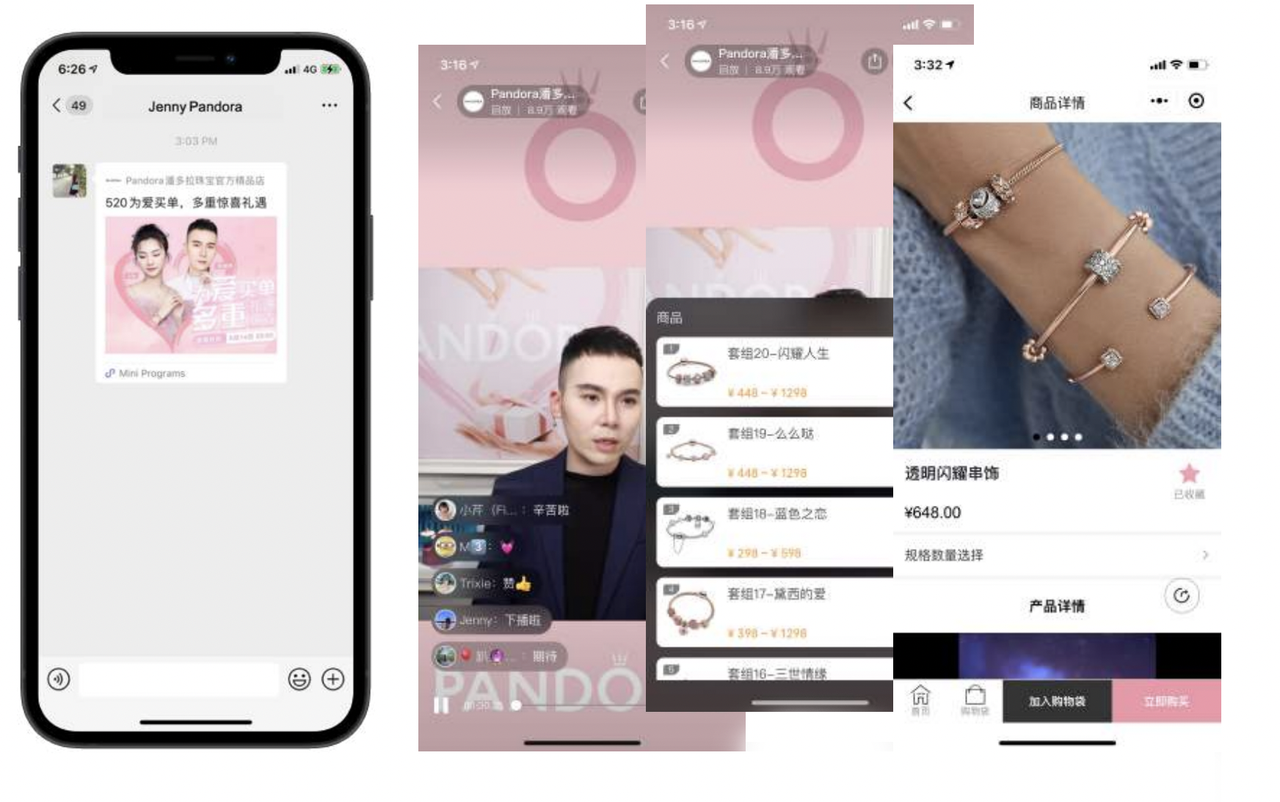
WeChat's importance has risen significantly in 2026, closely tied to a new round of technical upgrades. This year, WeChat has further integrated social contexts with transaction endpoints, launching a series of product and policy updates that create three stronger conversion moats while lowering the operating threshold for overseas brands.
1) All-scenario dynamic components: decentralising transaction touchpoints
WeChat upgraded traditional static links into real-time interactive "all-scenario product cards" that can penetrate Moments, groups, and search results. They integrate communication, decision-making, and payment into a single interface—users can purchase without interrupting social behaviour such as chatting or browsing Moments. This "friction removal" significantly reduces drop-off from consideration to conversion.
2) Payment-driven traffic matrix ("Shake for Offers"): turning offline stock assets into traffic assets
With WeChat Pay penetration reaching 60% in offline payment scenarios, WeChat introduced a "payment-as-marketing" mechanism. After checkout in physical stores, users can instantly create a digital connection with the online store via "Shake for Offers". This generates 300 million precise entrances per day for WeChat commerce and converts random offline footfall into sustainable private-domain assets.
3) Social Signal Centre: transforming "transactions" into "digital word-of-mouth"
WeChat created dynamic social-graph-based reminders in the "Me" entry point, converting friends' likes, saves, and purchases into social signals with trust endorsement. Data from December 2025 showed visits to this entry point increased 132%, and GMV surged 320%. For international retailers dependent on reputation, the trust leverage of "a friend liked this" can become growth momentum that no amount of ad spend can directly buy.
4) Moments ad optimisation and policy support: In 2026, WeChat Moments ads upgraded significantly in targeting capabilities. AI can automatically identify the highest-converting segments based on user behaviour, interests, and purchase habits; with LBS targeting, ads can reach users within 3 km of a store—making every impression more valuable. Meanwhile, WeChat lowered barriers for overseas brands: simplifying account setup, accelerating review, and even providing traffic subsidies to certain first-time entrants.
5) Upgraded B2C2C model: expanding the influence lever. WeChat commerce's core evolution lies in its B2C2C (Brand Advocate → Consumer) model. It is projected that by 2026, active "advocates/affiliates" in the WeChat ecosystem will exceed 20 million. These are not traditional sales agents; they are an influence network composed of loyal consumers, KOCs, and professional advisors. WeChat's policy of waiving technical service fees further reduces the cost of activating this network.
How International Brands Should Use WeChat: Strategic Playbooks Based on Strengths and Weaknesses
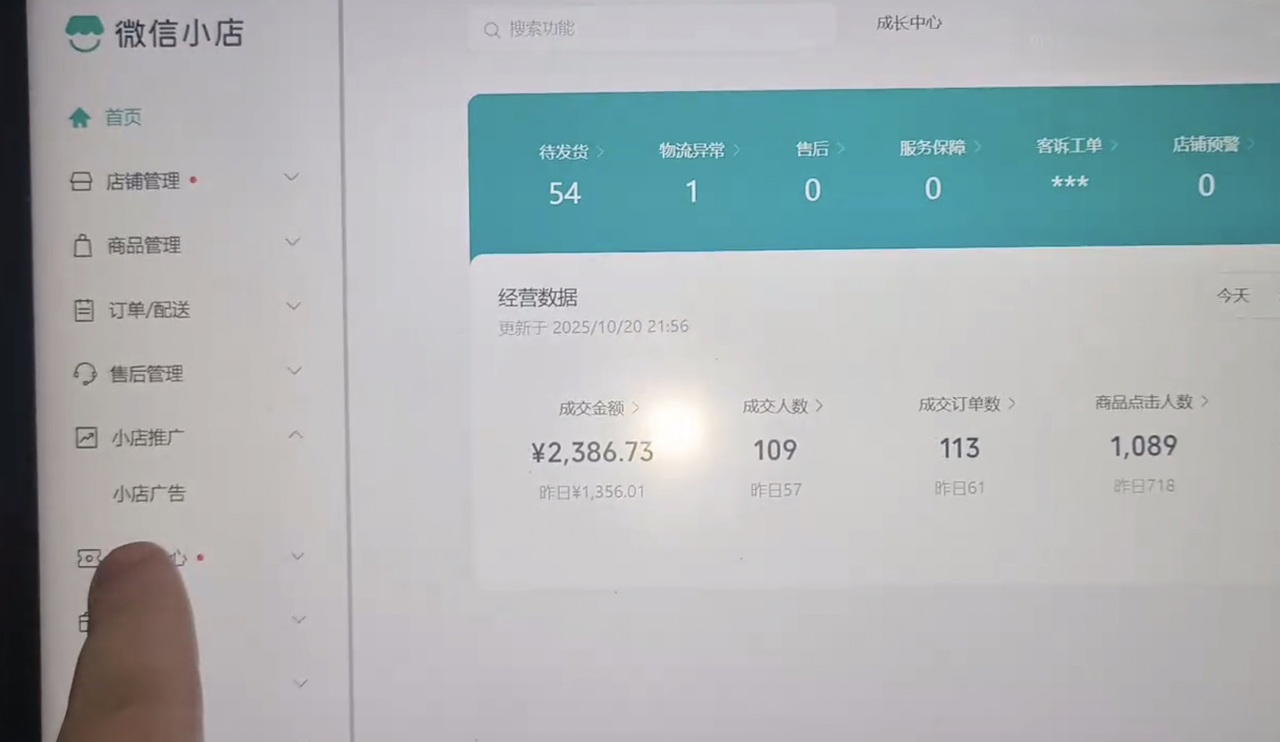
WeChat's upgraded ecosystem offers international brands a rare opportunity to break through China's current market constraints. But to capture these dividends, brands must first clarify their strengths and limitations in China, then design strategies that match WeChat's ecosystem logic.
1) Clarify strengths and weaknesses to identify the right entry point
Most international brands have mature heritage, advanced craftsmanship, and clear brand values—highly compatible with WeChat's preference for deep content and quality positioning. Many also possess global offline store networks, which can synergise with WeChat's "payment-as-marketing" mechanism. However, many face constraints such as insufficient understanding of Chinese social habits, lack of private-domain operational experience, and limited integration with local market contexts.
2) Targeted strategy: end-to-end execution—from content to organisation
Based on WeChat's ecosystem characteristics and a brand's strengths/weaknesses, international brands can execute through three core strategies:
Content Strategy: Use long-form content to amplify strengths and filter high-value audiences
- Position WeChat Channels (Video Accounts) as a "virtual flagship store." Publish detailed craftsmanship breakdowns and values-driven dialogues (prioritising 10-minute long-form videos) to filter for high-net-worth users.
- Optimise "social open rate." Design content with social capital—sustainability practices, charity projects, or unique brand narratives—so users are motivated to endorse and share in Moments.
Distribution Strategy: Activate the "social + algorithm" dual engine and accumulate private-domain assets
- For brands with offline stores, leverage "Shake for Offers" at checkout to guide users to pay with WeChat Pay and follow the brand's WeChat Store.
- For brands without offline stores, use WeChat Moments ads with AI-driven precision targeting to drive users to WeCom accounts or private groups.
- Abandon "broadcast thinking" for "conversation thinking": use WeCom for 1-to-1 personalised advisory services.
- Activate WeChat's 20 million advocates: select loyal users and KOCs as "cloud brand ambassadors."
Organisational Strategy: Build a decentralised sales matrix to improve operating efficiency
International brands should reduce reliance on a single "super livestream room" and adopt Tencent's "decentralisation" approach—building a flexible "honeycomb" sales matrix. Each advocate and each group becomes a micro sales node. While this model may lack short-term explosive peaks, it delivers strong risk resilience and higher profit retention.

From Selling Products to Operating Trust: Capturing the Growth Core in the Post-Traffic Era
In 2026, the "third path" WeChat has opened in China's e-commerce red ocean is essentially a comprehensive upgrade in transaction quality—no longer worshipping short-term GMV peaks, but deeply capitalising real social relationship networks (capitalisation of social ties).
For international brands, using WeChat well is not merely channel expansion—it is a strategic shift from selling products to operating trust. The underlying competitive logic in China has quietly changed: traffic is no longer the centre of the war; trust premium built on social graphs is.
By clarifying strengths and weaknesses, integrating WeChat's key 2026 updates, and executing refined strategies across content, distribution, and organisation, international brands can not only escape low-price competition and low-quality traffic traps, but also build a solid long-term foundation in China—holding the most stable growth lever of the post-traffic era.
Want to use WeChat to build stronger customer loyalty in China?
BINGO Digital helps international brands build an end-to-end WeChat system—from WeChat Store and Channels content to private-domain operations and social-proof conversion—so you grow with trust, not price wars.
Contact BINGO Digital to get your tailored plan